
Sep 14, 2026 | By
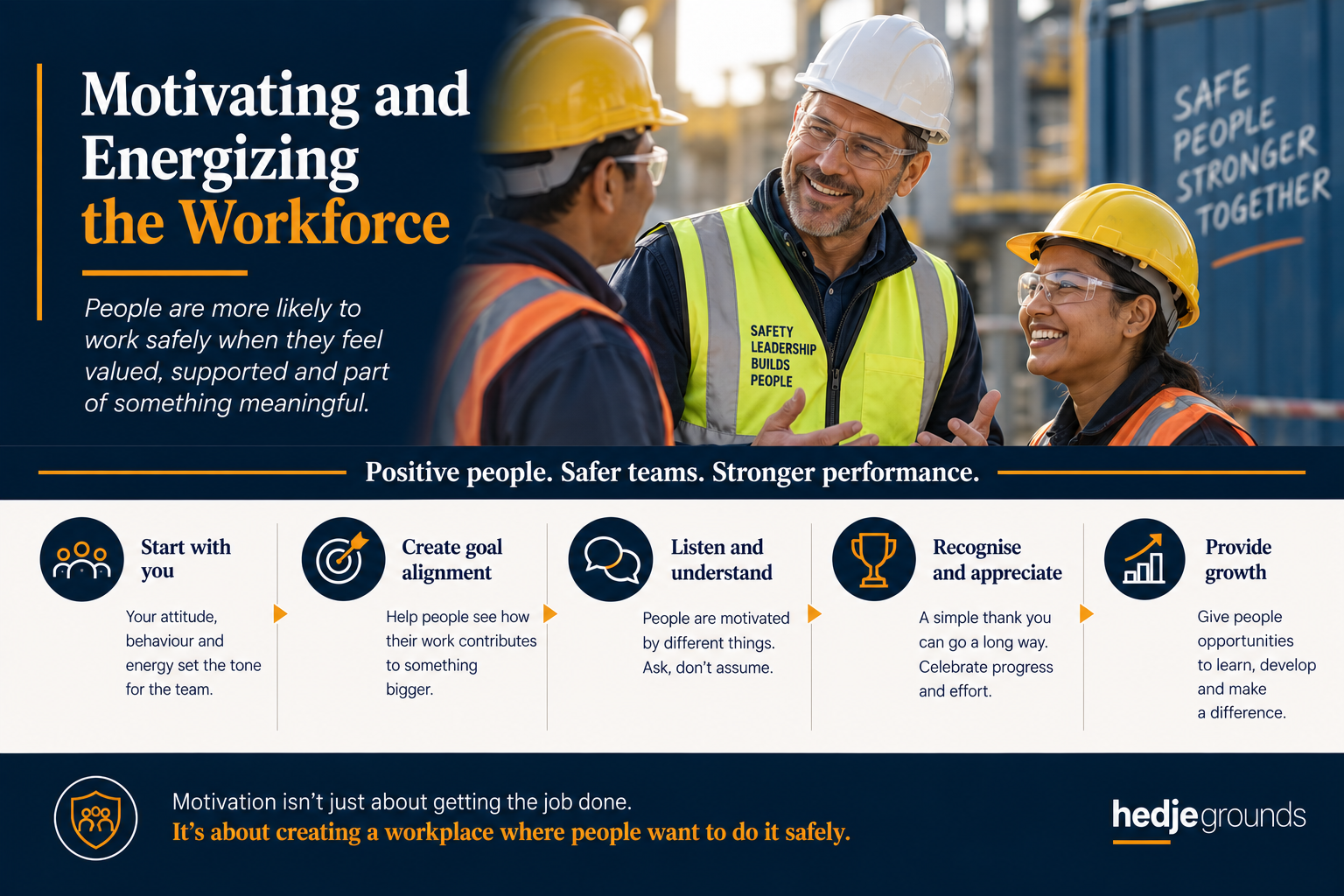
Motivation matters in safety, but perhaps not in the way we sometimes think.
We often talk about leaders “motivating” their people, as though motivation were something we could simply switch on. In reality, people are motivated by different things. Recognition matters to some. Others value autonomy, belonging, development, security, being listened to or simply knowing that their work matters.
A leader cannot manufacture motivation in another person. What they can do is create an environment in which people are more likely to feel engaged, valued and willing to contribute. And that has important implications for safety.
It Starts With the Leader
People pay attention to what their leaders say, but they pay even more attention to how they behave. A leader who is constantly frustrated, dismissive or stressed creates an emotional climate around them. So does a leader who is interested, respectful, enthusiastic and willing to listen. This matters because how people feel influences how they behave.
If an employee feels ignored, frightened or disrespected, we shouldn’t be surprised if they become reluctant to speak up, challenge something unsafe or admit that they don’t understand. Conversely, when people feel respected, listened to and trusted, it becomes much easier to have open conversations about risk.
This connects closely with the idea of psychological safety: people need to feel able to ask questions, raise concerns and acknowledge uncertainty without fear of embarrassment or punishment. Safety leadership therefore begins with a simple question:
What does it feel like to work for me?
Motivation Doesn’t Automatically Mean Safety
There is an important trap here. A motivated employee is not necessarily a safe employee.
Imagine a new starter who is enthusiastic, ambitious and keen to impress. They may work extremely hard but they may also lack experience, underestimate hazards or push ahead rather than stop and ask for help. Their motivation may actually increase their exposure to risk.
So the objective isn’t simply to create motivated people. Leaders need to combine motivation with competence, awareness and good judgement. Enthusiasm is valuable but enthusiasm without the ability to recognise hazards can be dangerous.
Stop Assuming You Know What Motivates People
Another common mistake is assuming that what motivates us will motivate everybody else. It won’t.
Money may encourage one person to work an additional shift while another would much rather spend the weekend with their family. One employee may value recognition; another may want greater independence. Someone else may be motivated by learning new skills or being trusted to help less experienced colleagues. The only reliable way to understand this is surprisingly simple:
Ask people – and listen to the answer.
That is another reason coaching skills are so valuable for safety leaders. Good leaders become curious about the people they lead rather than assuming they already understand them.
Create the Conditions for Motivation
There are countless theories of motivation, but in day-to-day safety leadership a few principles matter particularly strongly.
Give people recognition when they make a positive contribution. Help them understand how their work connects with the team’s wider purpose. Give competent people appropriate autonomy rather than unnecessarily controlling how every task is performed.
Create opportunities to learn and develop. Treat people fairly. Build strong relationships within the team. Ask for people’s views on how work can be made safer, and genuinely listen to what they tell you.
Perhaps most importantly, give people opportunities to contribute.
When an experienced employee helps coach someone newer, for example, you do more than transfer knowledge. You communicate trust, recognise expertise and strengthen ownership of safety within the team.
Motivation Is About More Than Getting the Job Done
Fear can motivate people. So can pressure. So can money. But that doesn’t necessarily create the kind of motivation we want.
A person may comply while the supervisor is standing beside them because they fear the consequences of doing otherwise. That is very different from someone choosing to work safely because they understand the risk, care about their colleagues and feel personally responsible for doing the job well and that distinction matters.
Strong safety cultures are not built by finding ever more powerful ways of making people comply. They are built by creating workplaces where people want to contribute to safety and that brings us back to leadership.
If we want an energized, engaged and safety-conscious workforce, perhaps the first question isn’t:
“How do I motivate my people?”
It is:
“What kind of environment am I creating for them?”
By David Turberfield

Aug 27, 2026 | By
A strong safety culture is built when people look out not only for themselves, but for one another. Safety coaching helps turn everyday observations and interventions into opportunities to build awareness, confidence and shared responsibility for safety.
Read More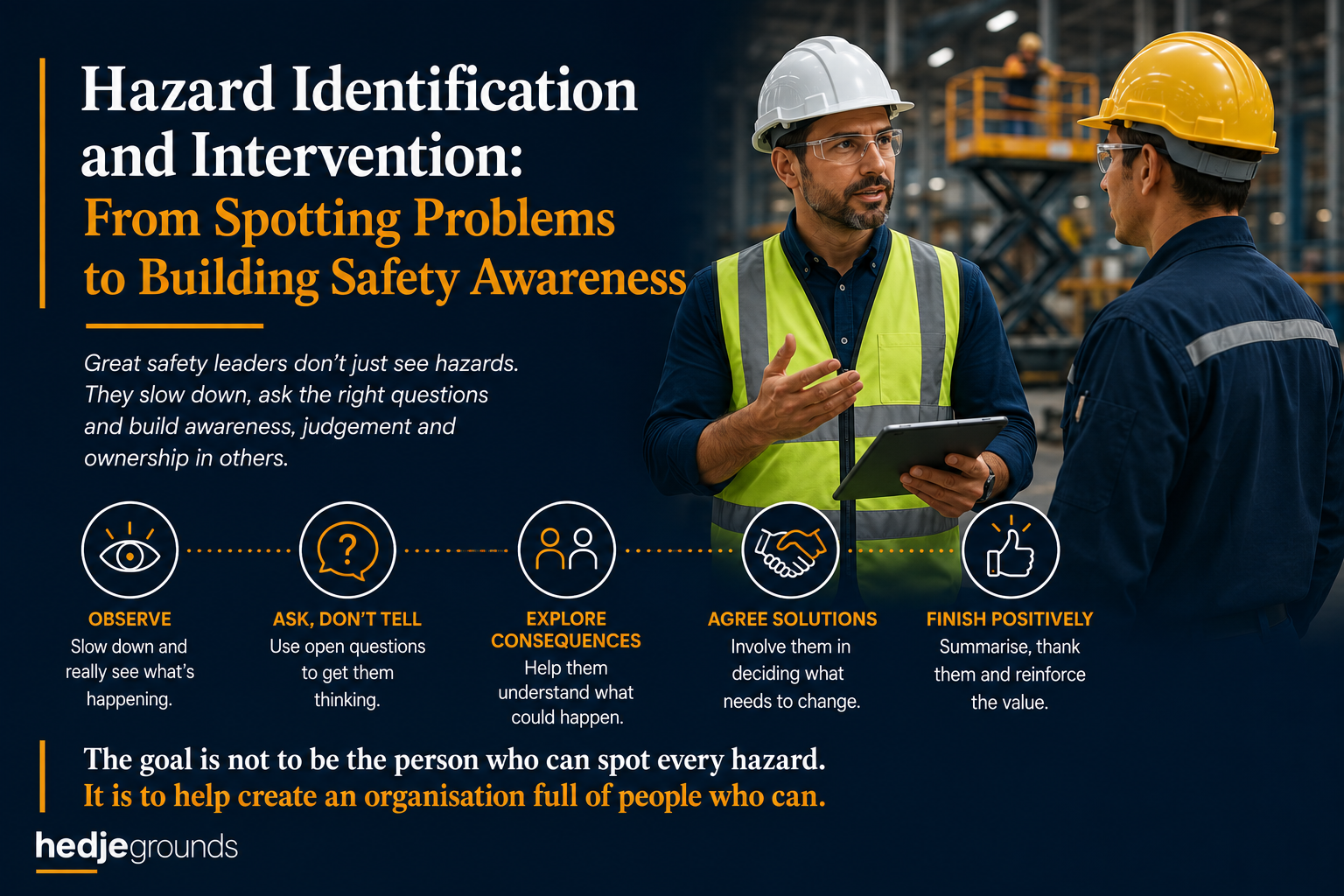
Aug 11, 2026 | By
Effective safety leadership is about more than spotting hazards. By slowing down, asking the right questions and helping people understand consequences and develop their own solutions, leaders can turn everyday safety interventions into opportunities for learning, ownership and stronger safety culture.
Read More
Jul 23, 2026 | By
The best safety leaders don’t simply understand risk – they notice what everyone else has stopped seeing. Here’s how coaching transforms hazard recognition.
Read More