
Aug 27, 2026 | By
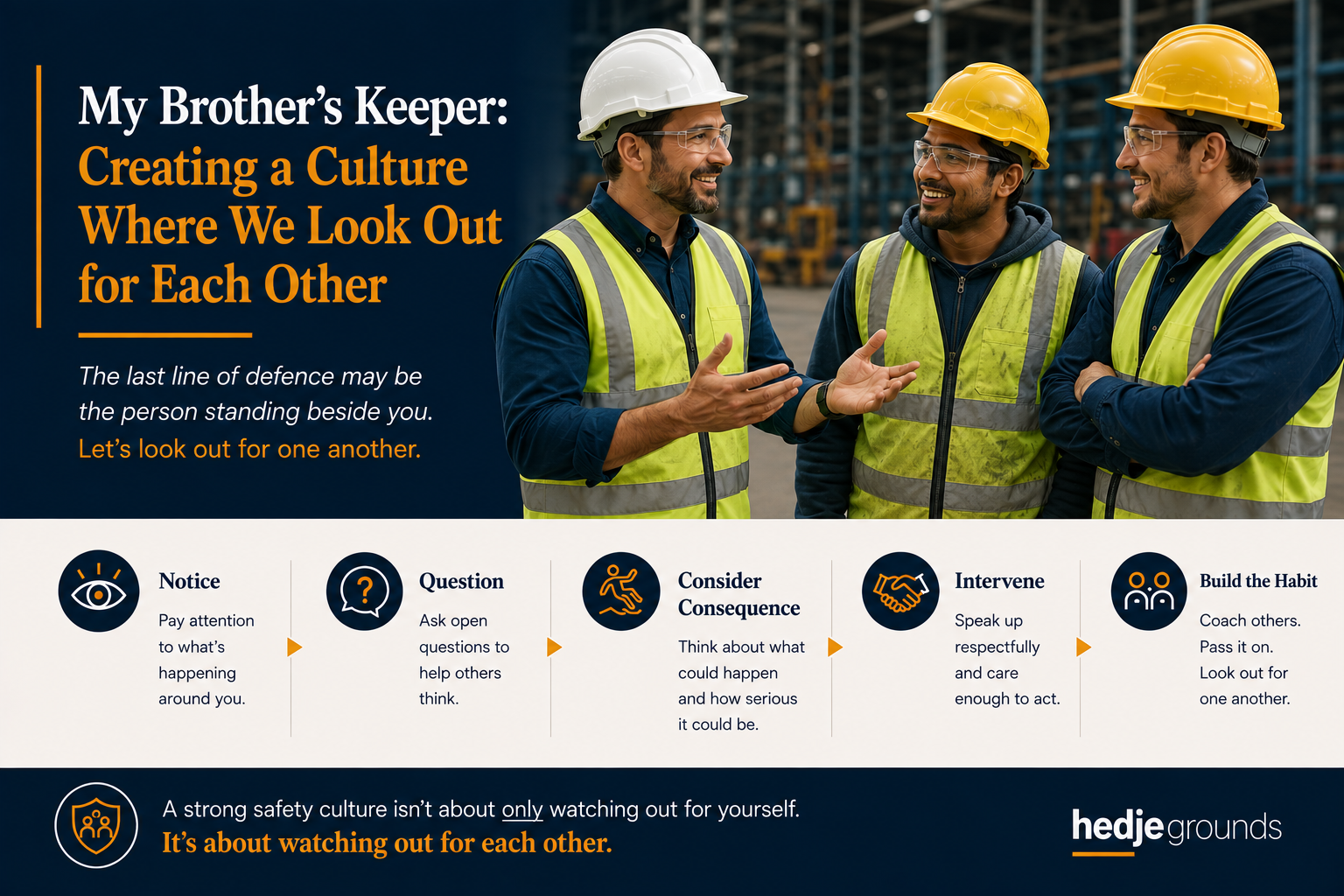
People sometimes do things at work that, viewed afterwards, make very little sense.
Someone takes a shortcut. An experienced operator overlooks an obvious hazard. A person continues with a task despite something clearly not being right. It is tempting to ask, “Why would anyone do that?” But people rarely arrive at work intending to get hurt. They may be rushing, inadequately trained, tired, unwell or distracted. Familiarity can make hazards seem normal. Poorly designed equipment or working arrangements may also influence their choices.
And sometimes their mind is simply somewhere else. Problems at home, financial worries, illness in the family or any number of other concerns can affect our attention and judgement. We don’t leave the rest of our lives at the factory gate.
So, if people are fallible, and all of us are, what is the last line of defence when someone’s attention or judgement lets them down? Very often, it is the person standing beside them.
The Last Line of Defence
The expression My Brother’s Keeper captures a simple idea: we look out for one another.
In a strong safety culture, responsibility doesn’t stop with our own behaviour or our own task. If I see something that could hurt you, I say something. If you see me taking a risk that perhaps I haven’t recognised, I expect you to say something too.
Most organisations would agree with this principle. Many tell employees to intervene when they see something unsafe. The more difficult question is, how do we turn that expectation into a habit?
This is where safety coaching can help.
Don’t Just Correct the Hazard
Imagine four people working together.
One person, let’s call him A, is standing on loose scaffold poles. Beside him is uncapped rebar. There is no immediate emergency, but if he trips, the consequences could be severe. The obvious intervention is to approach A and tell him to move. The immediate problem may be solved but there is another opportunity.
Three colleagues, B, C and D, are working nearby. None of them has intervened. So instead of only asking, “Why is A standing there?”, we might also ask, “Why haven’t B, C and D noticed?” Perhaps they are concentrating on their own work. Perhaps they have become accustomed to the conditions. Or perhaps looking out for other people’s safety simply isn’t part of the team’s normal behaviour.
A safety coach can work with that. Approach B, establish some rapport and ask, “have a look at your colleague over there. Is there anything not quite right?”. Perhaps B doesn’t see anything so narrow the question, “what is he standing on?”. Now B notices the loose scaffold poles. “What could happen?” He could trip. “And if he fell, where might he land?” Now B sees the uncapped rebar.
What initially appeared to be a minor housekeeping issue suddenly looks much more serious. The important point is that we haven’t told B the answer. He has worked it out. That is where the learning happens.
Turn One Conversation Into a Habit
Now take the conversation one step further. Ask B, “why hadn’t you noticed that before?” Perhaps he was simply concentrating on his own task. Then introduce the bigger idea, “you guys want to look out for one another, don’t you?” Of course they do.
The conversation has now moved beyond scaffold poles and rebar. It is about responsibility towards the people around us and this is where the intervention can become particularly powerful. Rather than ending the conversation, ask B to bring C over and say, “ask him the same questions I just asked you.” B now coaches C. C can then involve D.
Something important has changed. The safety leader has not simply corrected a hazard. They have started developing the team’s ability to notice, question and intervene for themselves. This reflects an important leadership principle: develop capability rather than dependency.
If every safety problem requires a manager or safety professional to notice it and provide the answer, the organisation remains dependent upon that person. The real test of safety culture is what happens when the manager isn’t there.
When There Is Immediate Danger
There is, of course, an important qualification. If there is an immediate risk of serious harm, stop the activity. Coaching should never become an excuse for failing to act. Once the immediate danger has been controlled, however, the opportunity to coach returns. Rather than immediately explaining everything that was wrong, ask, “why do you think we stopped the task?” Make the situation safe first. Then generate thinking. Good safety leadership requires knowing when to direct and when to develop.
Creating a Culture of My Brother’s Keeper
The aim is not to create a workforce constantly policing one another. It is to establish a simple social expectation: If I see something that could hurt you, I won’t simply walk past, and I expect the same from you.
Leaders can help create that expectation through everyday conversations, helping people notice hazards for themselves, asking about consequences, exploring why something wasn’t noticed and encouraging people to pass that learning on to others. Repeated often enough, these interactions begin to establish habits and habits begin to establish culture.
Systems, procedures, engineering controls, training and competent supervision all matter enormously. We should never design work so that safety depends solely upon somebody noticing a mistake at the last moment, but organisations are made up of human beings, and human beings occasionally become tired, distracted, rushed or simply get things wrong. At that moment, one of the most valuable protections we have may be the person standing beside us.
Creating a culture of My Brother’s Keeper means developing the awareness, confidence and willingness to notice when something isn’t right and to care enough about one another to do something about it. The strongest safety cultures are not those where everyone is only looking after themselves. They are those where everyone looks out for each other.
By David Turberfield
Sep 14, 2026 | By
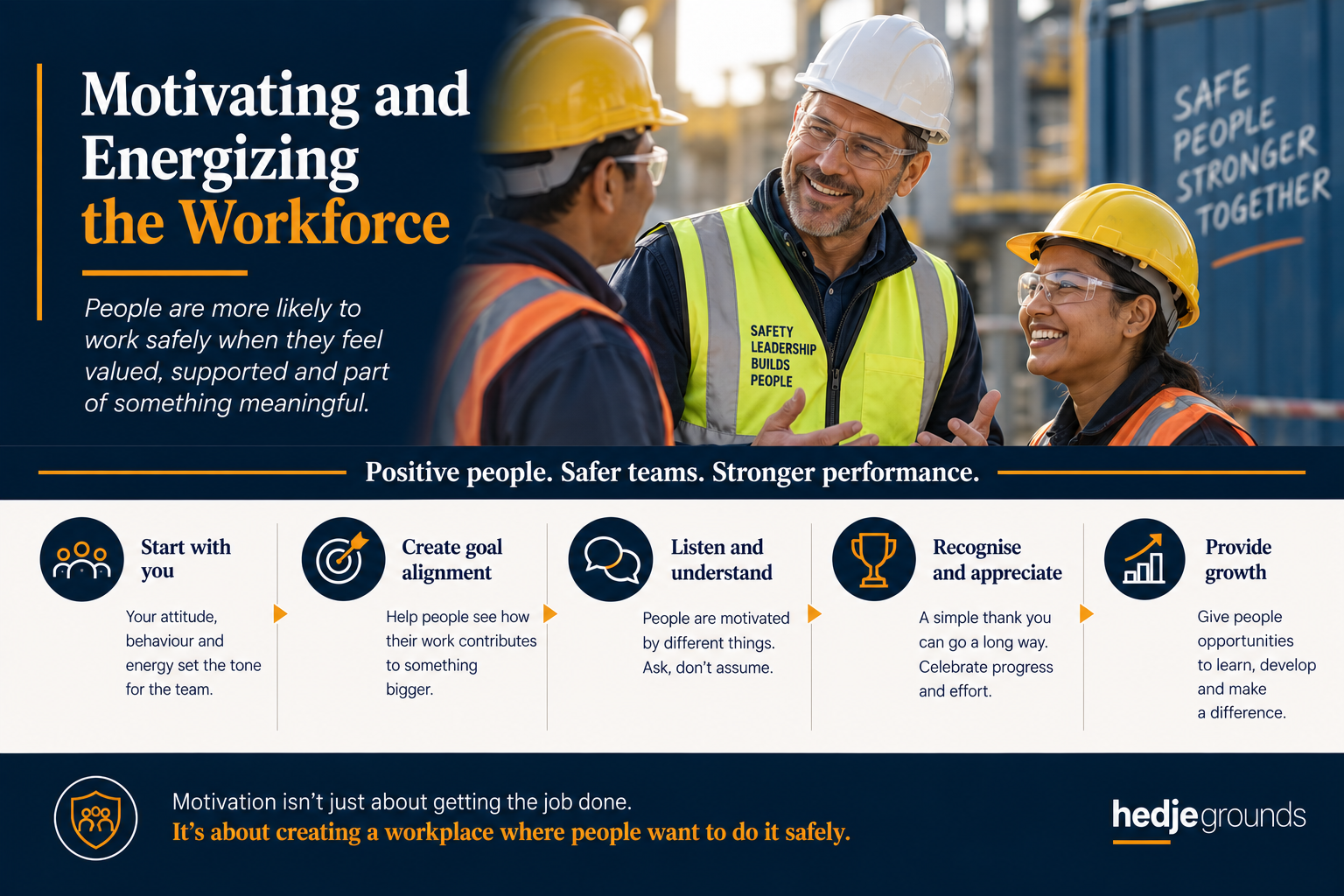
Motivation matters in safety – but leaders cannot simply motivate people on demand. The real opportunity is to create an environment where people feel respected, trusted and willing to contribute, combining motivation with the competence and judgement needed to work safely.
Read More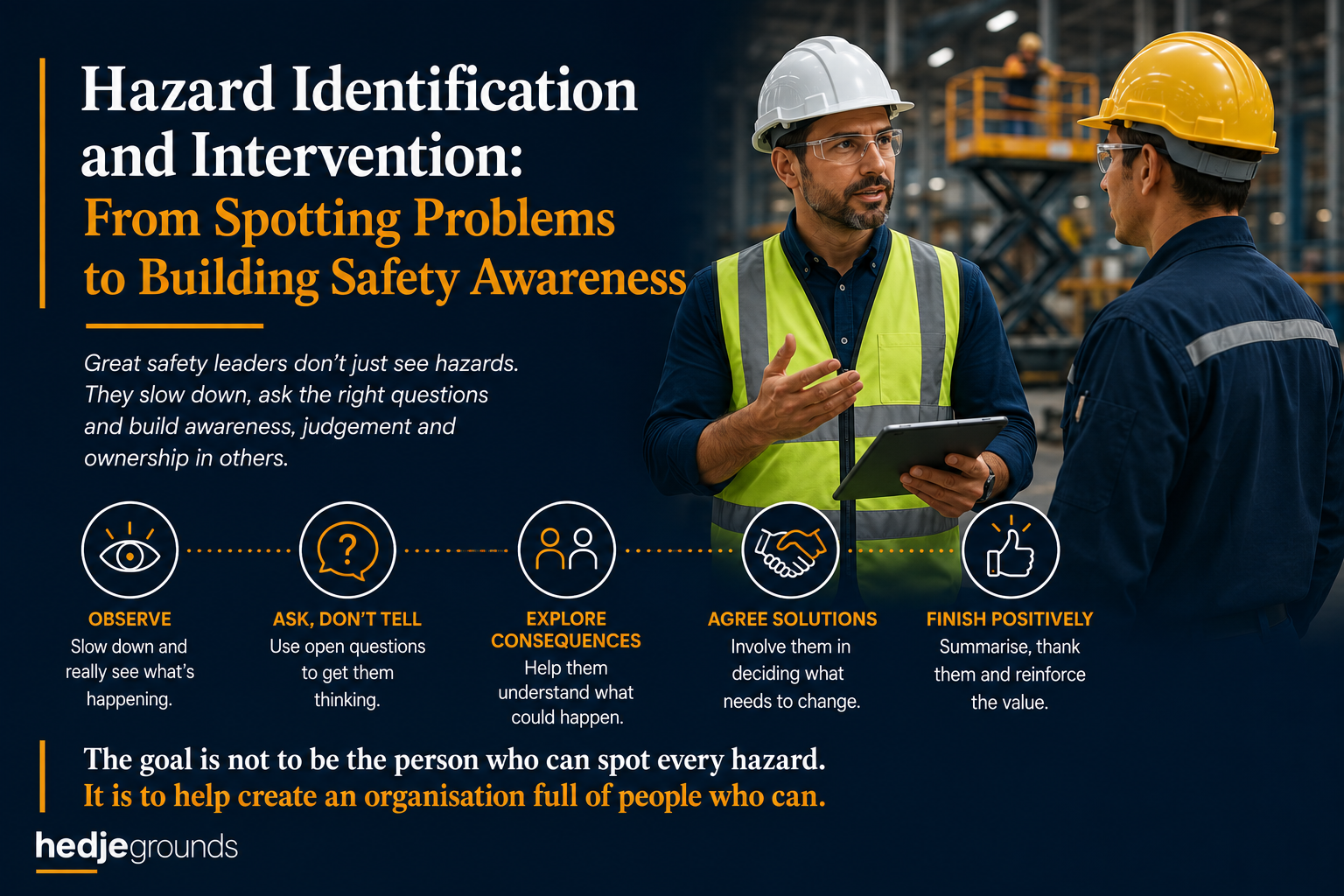
Aug 11, 2026 | By
Effective safety leadership is about more than spotting hazards. By slowing down, asking the right questions and helping people understand consequences and develop their own solutions, leaders can turn everyday safety interventions into opportunities for learning, ownership and stronger safety culture.
Read More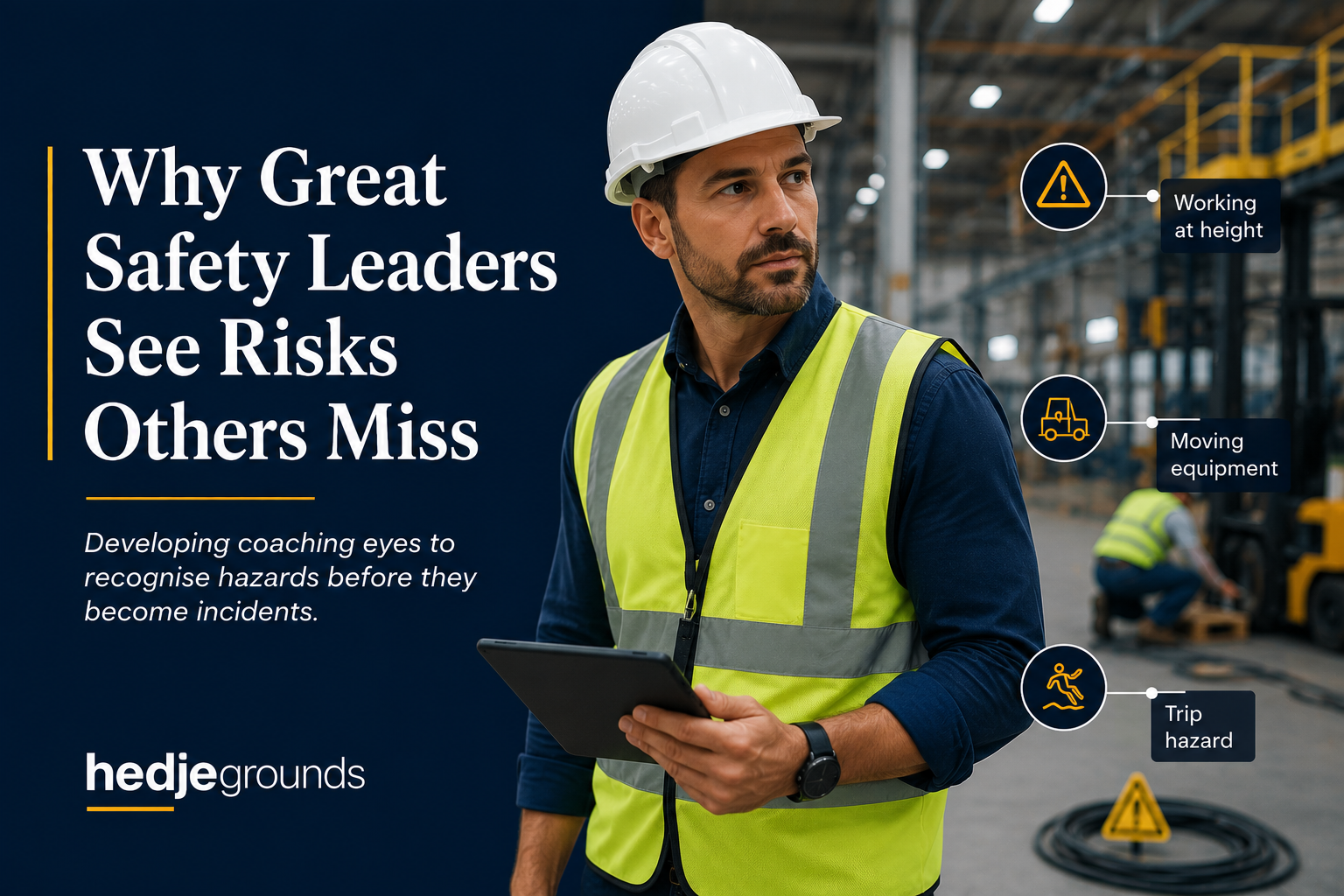
Jul 23, 2026 | By
The best safety leaders don’t simply understand risk – they notice what everyone else has stopped seeing. Here’s how coaching transforms hazard recognition.
Read More