
Aug 11, 2026 | By
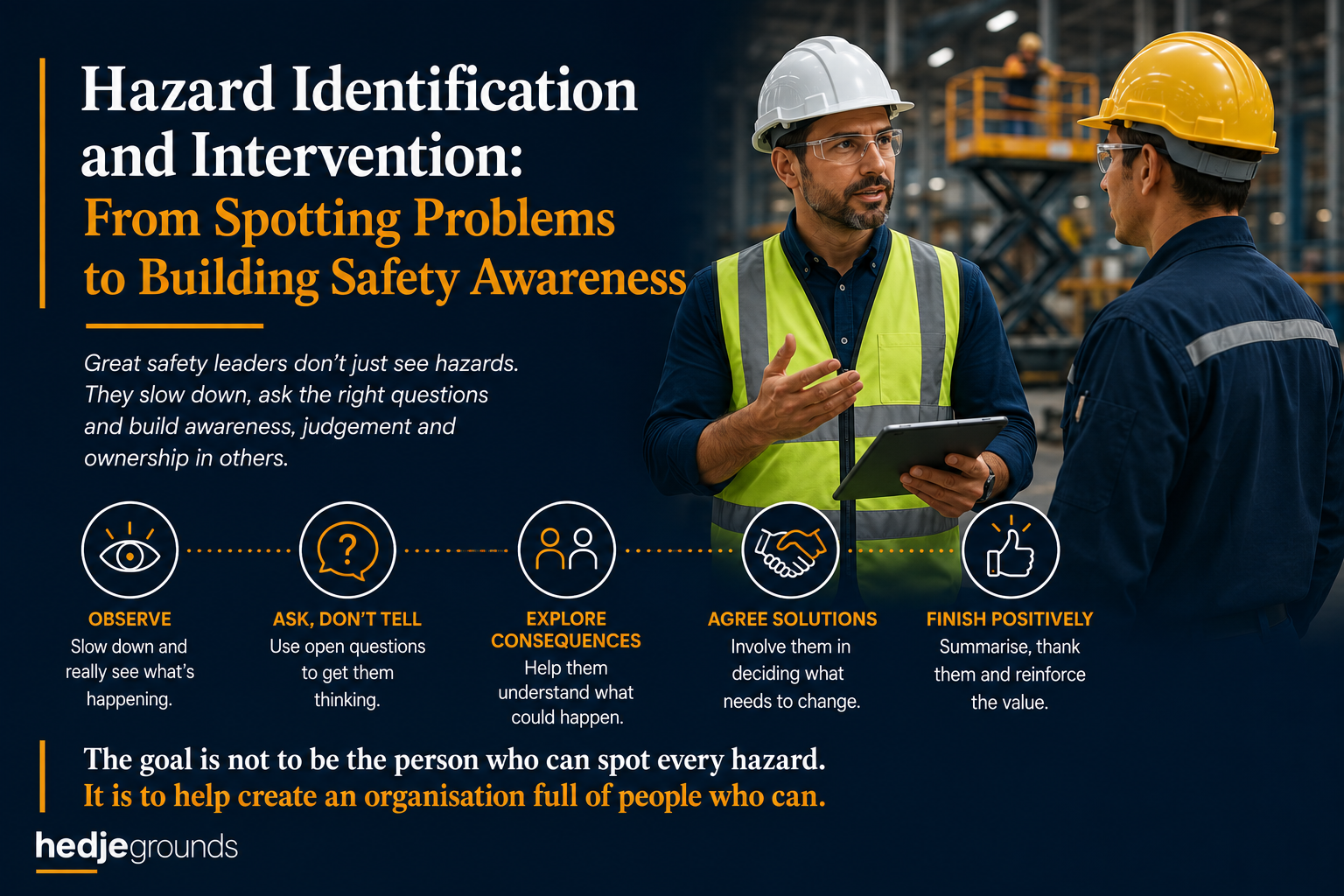
One of the most important skills of a safety leader sounds deceptively simple: being able to see what is actually happening in front of you.
Walk through almost any operational workplace and there will be hazards. Some will be obvious. Others will be less so. There may be equipment in the wrong place, an awkward working position, an uncontrolled energy source, a poorly designed access route, simultaneous activities interacting with one another, or a seemingly minor housekeeping issue that could contribute to a much more serious event.
The challenge is not simply identifying hazards. The real leadership challenge is knowing what to do once you have seen them. There is a significant difference between a leader who walks through the workplace correcting people and one who uses what they observe to build greater awareness, judgement and ownership in others.
That difference is at the heart of safety coaching.
Slow Down and Learn to See
When leaders visit operational areas, there can be a tendency to keep moving. We walk, talk, look around and perhaps ask a few questions but effective hazard identification requires something different. It requires us to slow down and observe.
A lot can exist within a single work situation: fall hazards, dropped objects, inadequate segregation, flammable materials, poor access, ignition sources, trip hazards, simultaneous operations and people positioned in the line of fire. At first glance, we may notice only one or two but look for longer and we see considerably more.
This is partly a question of attention. Human beings are very good at becoming accustomed to their surroundings. What initially looks unusual gradually becomes normal. In safety, this can contribute to what is often described as the normalisation of deviance: conditions or practices that should concern us become accepted because they have occurred repeatedly without an adverse consequence.
That is why leaders need to develop disciplined curiosity in the field. Rather than simply asking, “What is wrong here?”, try thinking through three connected questions, “What is the hazard? What controls should be in place? What could happen if those controls fail?” This moves observation beyond finding technical non-conformities and towards understanding risk – slow down and observe; think about the hazard, then the control, then the risk.
You Don’t Need to Point Out Everything
There is another temptation when conducting a safety observation. Once we start noticing hazards, we want to mention all of them. That is understandable from a safety professional’s perspective, but it may not make for a particularly effective coaching conversation.
If somebody is presented with a list of eight things that are not quite right, the interaction can quickly begin to feel like an inspection or an audit. The person may become defensive, disengage or simply wait for the conversation to finish. Unless there is an immediate danger requiring intervention, it can often be more valuable to select one or two significant issues and explore them properly. The objective changes from, “how many things can I identify?” to “how much thinking can I generate?”. That is an important distinction.
Don’t Walk Past – But Don’t Rush In Either
Seeing a hazard creates a responsibility to act, as what leaders repeatedly ignore can gradually become interpreted as acceptable. Our actions, including our decision not to act, communicate what really matters but intervention does not necessarily mean immediately telling someone what they have done wrong.
Unless there is imminent danger requiring the activity to be stopped, take a moment first to understand the situation – observe the work situation, consider the hazards and existing controls, understand who is involved and then engage in a coaching manner. That short pause can make the difference between an intervention based on assumptions and a useful coaching conversation based on understanding.
The First Few Seconds Matter
Imagine someone you don’t know approaching you at work wearing the metaphorical badge of “management” or “safety”. Before they have said anything, you may already be thinking, “here comes trouble…” We need to begin with something very ordinary – a greeting, an introduction and a name to establish rapport. This is easy to underestimate.
A coaching conversation depends on psychological safety. If the person feels they are about to be blamed, criticised or caught out, their attention shifts from thinking about the work to protecting themselves. Tone therefore matters, body language matters, and words matter. How you say something is at least as important as what you say.
Ask – Don’t Tell
Suppose you notice someone working in a potentially unsafe position. The quickest intervention would be to approach that person and say, “you shouldn’t be standing there. Move over there.” The problem may be corrected, but very little learning has occurred.
The alternative is to ask someone nearby, “have a look at your colleague over there. Is there anything not quite right?” Perhaps they don’t see it – so you narrow the question, “have a look at his legs, what is he standing on?” Now they notice the loose scaffold poles, and you add, “What could happen?” They recognise that the person could trip and fall. Then, “If he fell, where might he land?” Now they notice the uncapped rebar nearby.
What initially looked like poor housekeeping becomes something with the potential for a serious injury. Finally we ask, “what needs to happen here?” and have an open discussion about next steps.
This progression – hazard, consequence, severity, action – is where the learning happens. The leader could have explained all of that in thirty seconds but that would have been the leader’s thinking. Through questioning, it becomes the other person’s thinking and that’s what matters.
Coaching Builds Capability, Not Just Compliance
This is where safety coaching differs fundamentally from traditional inspection. Inspection asks, “is the workplace safe?” Coaching asks, “are the people working here becoming better at recognising and managing risk themselves?” The distinction is important because leaders cannot be everywhere.
A safety culture cannot depend upon a manager or safety professional being present to spot every hazard and correct every unsafe behaviour. The organisation needs people throughout the workforce who can recognise changing conditions, anticipate consequences and make good decisions when nobody is watching. That requires more than rules. It requires capability.
Good questioning helps develop that capability because it exercises the person’s own judgement. Instead of supplying the answer, the coach helps the individual work through the situation. In leadership terms, this is the difference between directing and developing.
Sometimes direction is necessary, if somebody is about to suffer serious harm then stop the activity, but when there is time to coach, use it.
Finish Positively
Safety interventions should not leave people regretting that they ever spoke to a leader. Once an appropriate action has been agreed, summarise the discussion, recognise the person’s contribution and thank them.
That final moment influences the next interaction. If people associate safety conversations with criticism, embarrassment or punishment, they will naturally try to avoid them. If they associate them with respectful discussion, useful questions and genuine concern, they are much more likely to engage again.
And over time, those repeated interactions contribute to culture.
A Simple Framework for Safety Coaching in the Field
This approach can be broken down into a practical seven stage framework:
None of these steps is particularly complicated. The skill lies in doing them naturally.
From Safety Observation to Safety Leadership
A good field visit should achieve more than leaving the workplace slightly safer than it was before. It should leave the people better at managing safety – that is the real opportunity in safety coaching. When leaders slow down, observe carefully and ask good questions, they do more than identify hazards. They help people develop the ability to recognise hazards themselves:
The goal is not to become the person in the organisation who can spot every hazard. It is to help create an organisation full of people who can.
By David Turberfield
Sep 14, 2026 | By
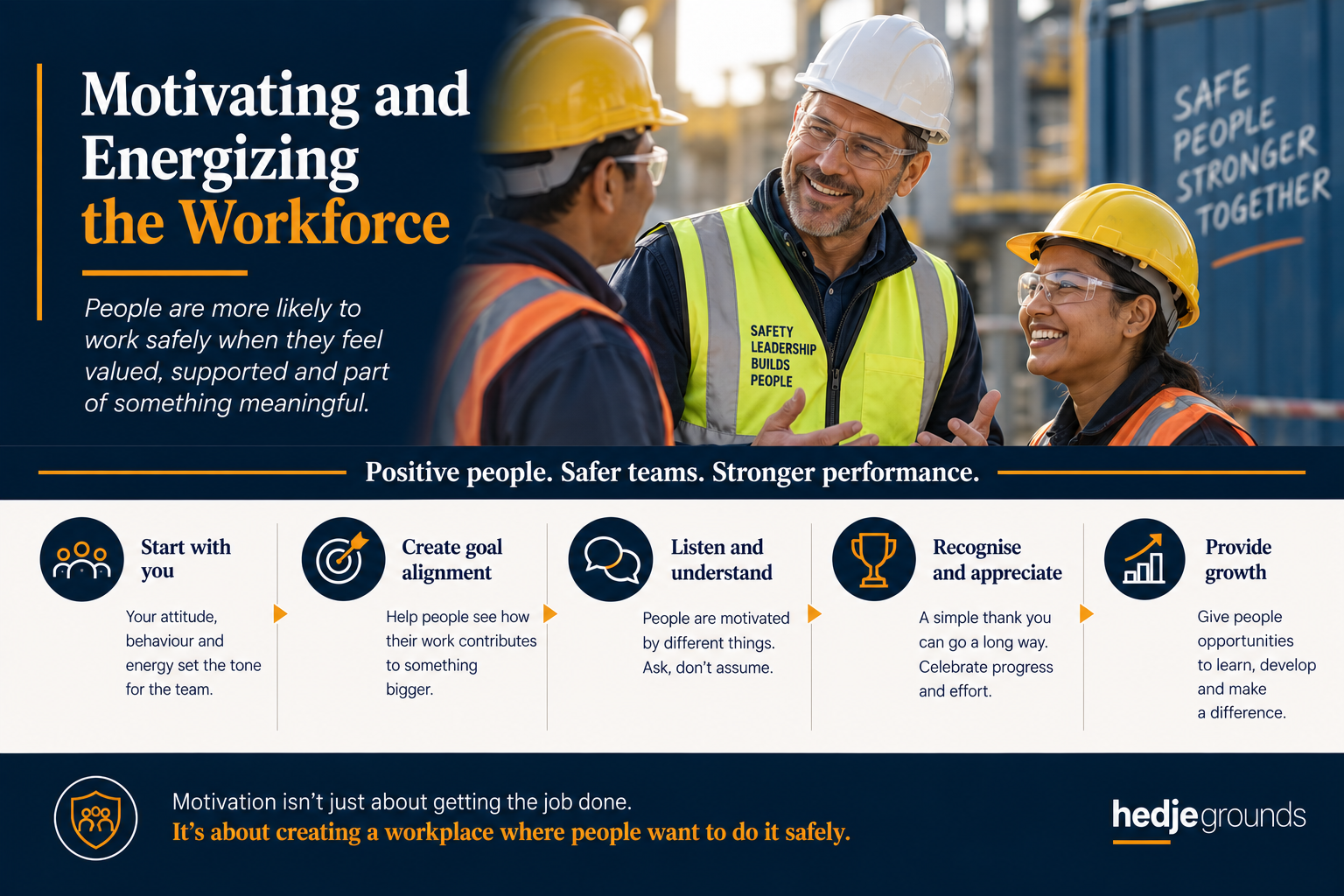
Motivation matters in safety – but leaders cannot simply motivate people on demand. The real opportunity is to create an environment where people feel respected, trusted and willing to contribute, combining motivation with the competence and judgement needed to work safely.
Read More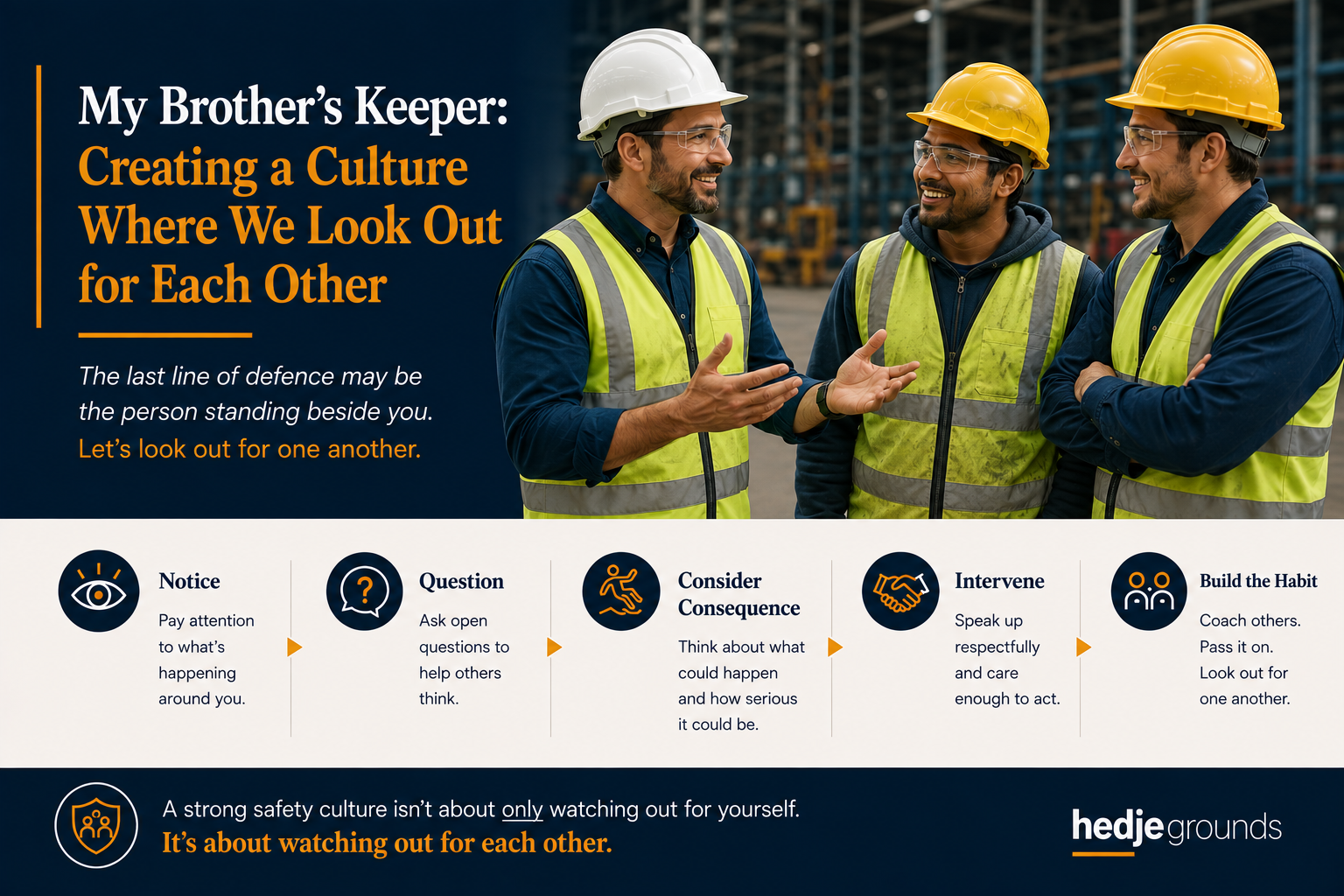
Aug 27, 2026 | By
A strong safety culture is built when people look out not only for themselves, but for one another. Safety coaching helps turn everyday observations and interventions into opportunities to build awareness, confidence and shared responsibility for safety.
Read More
Jul 23, 2026 | By
The best safety leaders don’t simply understand risk – they notice what everyone else has stopped seeing. Here’s how coaching transforms hazard recognition.
Read More