
Jul 23, 2026 | By
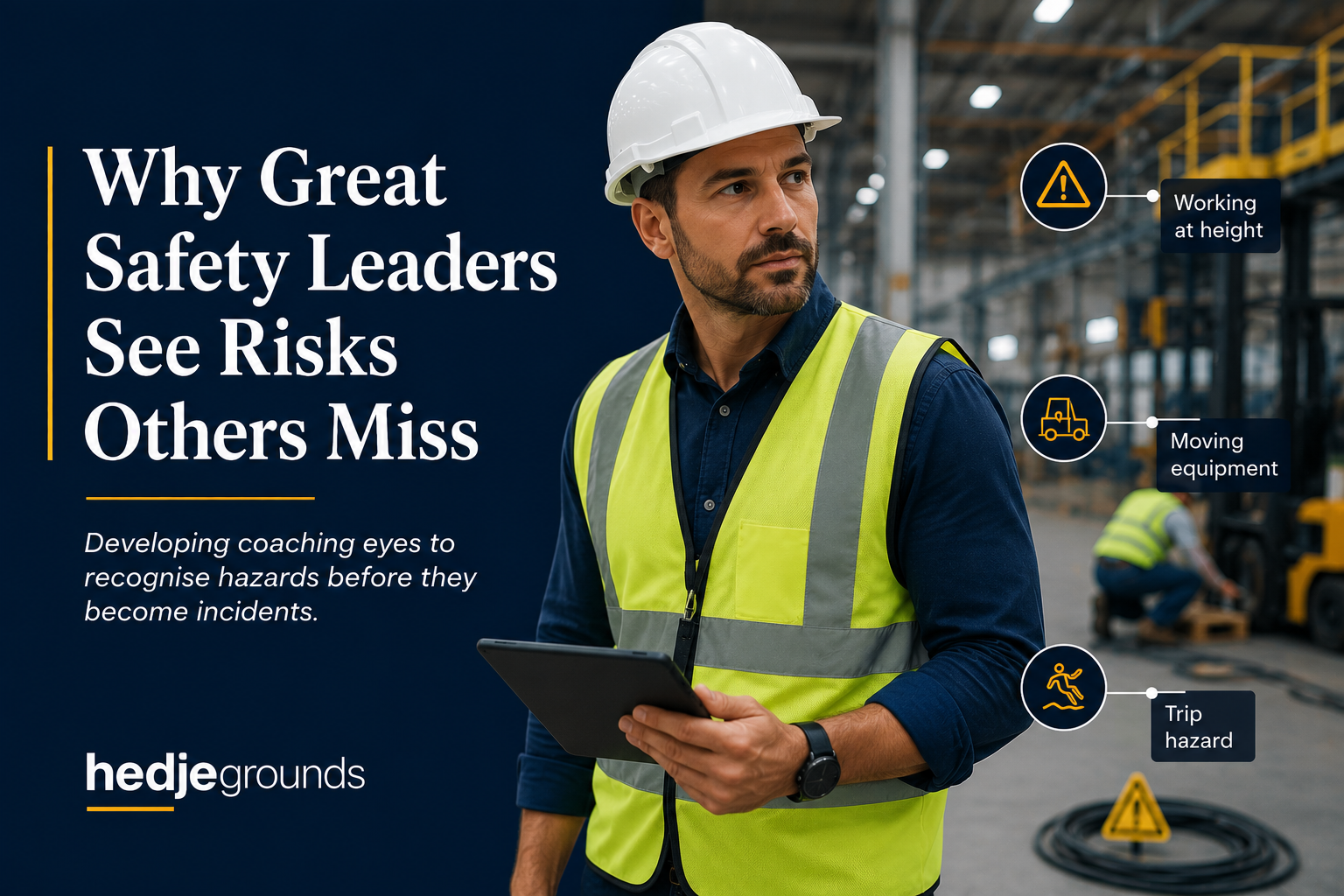
Most workplace incidents don’t happen because people don’t know the rules. They happen because hazards become normal.
One of the greatest paradoxes in safety leadership is that experience, while invaluable, can also become a blind spot. The longer we work in the same environment, the more likely we are to stop noticing the risks that surround us every day. What once caught our attention gradually fades into the background as routine takes over.
The best safety leaders recognise this tendency. They deliberately slow down, remain curious and continuously train themselves to see what others have stopped seeing. This ability, to notice weak signals before they become incidents, is one of the defining characteristics of a strong safety culture.
Why Experience Isn’t Always an Advantage
Walk a new employee around a site and they’ll often point out hazards that long-serving employees walk past every day. That’s because familiarity changes perception.
Psychologists refer to this phenomenon as normalisation of deviance, the gradual acceptance of conditions or behaviours that slowly drift away from good practice simply because nothing bad has happened – yet. Over time, temporary solutions become permanent, housekeeping standards gradually decline, and shortcuts become accepted ways of working. People adapt to the environment rather than questioning it.
Great safety leaders deliberately challenge this process. Instead of assuming that all is well because nothing has happened before, they ask:
Curiosity is one of the most powerful leadership behaviours in safety.
Hazard, Risk and Control Are Not the Same Thing
During coaching sessions, we often hear the words hazard and risk used interchangeably. They are not the same thing. A hazard is anything with the potential to cause harm and a risk is the likelihood that someone will actually be harmed, together with the potential consequences. A control is the measure we put in place to eliminate or reduce that risk. This distinction matters because it changes the quality of leadership conversations.
Effective leaders don’t simply ask whether something is dangerous. They ask, “What is the hazard? What are the potential consequences? What controls are in place to prevent an incident? And how reliable are those controls?” These questions move the discussion beyond opinion and towards disciplined risk management grounded in evidence rather than assumption.
Great Safety Leaders Slow Down
One of the simplest coaching techniques we teach in the field is also one of the hardest.
Slow down.
Don’t immediately offer advice. Don’t rush to solve the problem. Observe first – take your time. Many hazards only become visible when we deliberately pause and really look at what’s happening.
During field coaching, we encourage leaders to spend time simply watching work unfold before asking questions. Almost without exception they begin noticing things they had previously overlooked:
The quality of our observations determines the quality of our coaching conversations. Good coaches see more because they look differently.
Don’t Fall in Love with PPE
When organisations identify a hazard, the instinctive response is often to issue personal protective equipment – a pair of gloves, a hardhat, eye protection, body harness. PPE has a crucial role, but it sits at the bottom of the Hierarchy of Controls because it relies almost entirely on people doing the right thing every time.
Exceptional organisations begin by asking how do we remove the hazard altogether? If elimination isn’t possible, then they work progressively through substitution, isolation, engineering controls, administrative controls – leaving PPE as a last resort. This approach doesn’t simply reduce risk, it encourages leaders to solve problems at their source rather than relying on individual behaviour.
One of my favourite ways of illustrating hazard identification is what we jokingly call The Crocodile Test. Imagine there’s a crocodile in your office. Would you eliminate it? Replace it with something less dangerous? Isolate it? Or simply put up warning signs, hand out PPE, and hope for the best? The answer seems obvious. Yet many organisations routinely default to the last two options, relying heavily on signage and personal protective equipment instead of eliminating hazards at their source. The Hierarchy of Controls is, in many ways, nothing more than common sense applied systematically.
Developing Coaching Eyes
Technical knowledge is important, understanding legislation is important, risk assessment is important, but outstanding safety leaders develop something more. They develop what we can call coaching eyes.
Instead of carrying out inspections designed to find fault, they approach the workplace with curiosity. They ask questions, observe carefully, encourage conversations and help people think rather than simply telling them what to do.
As a result, they don’t just identify hazards. They uncover assumptions, reveal weak signals, strengthen ownership and help create a culture where everyone becomes better at recognising and managing risk. That is where lasting improvements in safety performance begin.
Final Thoughts
The most effective safety leaders don’t simply know about hazard, risk and controls. They notice more, ask better questions and remain curious even in familiar environments because in safety, the incident that changes everything is often preceded by a hazard that everyone else had stopped seeing. The ability to recognise those hazards before they become incidents isn’t simply a technical skill, it’s a leadership skill.
By David Turberfield
Sep 14, 2026 | By
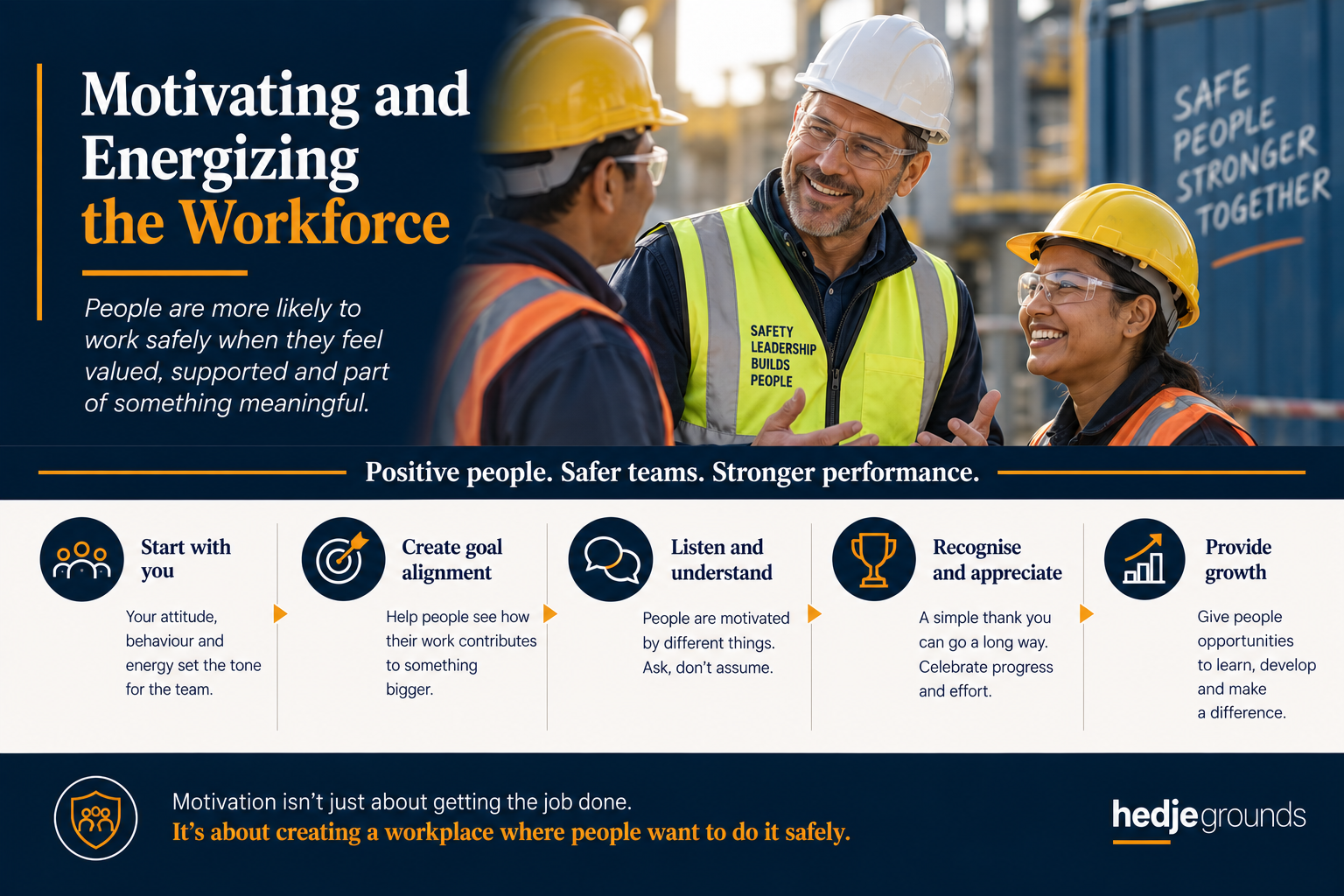
Motivation matters in safety – but leaders cannot simply motivate people on demand. The real opportunity is to create an environment where people feel respected, trusted and willing to contribute, combining motivation with the competence and judgement needed to work safely.
Read More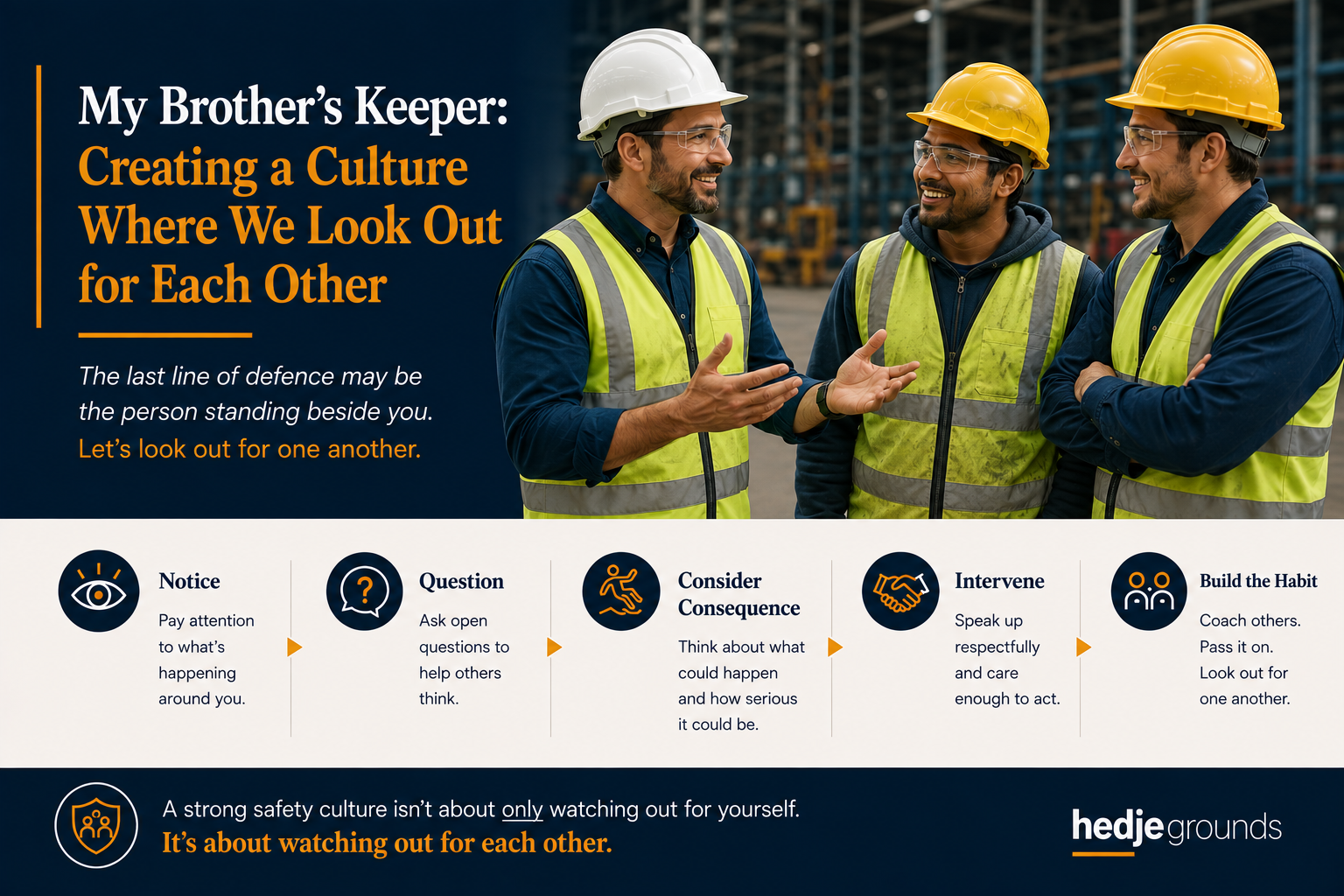
Aug 27, 2026 | By
A strong safety culture is built when people look out not only for themselves, but for one another. Safety coaching helps turn everyday observations and interventions into opportunities to build awareness, confidence and shared responsibility for safety.
Read More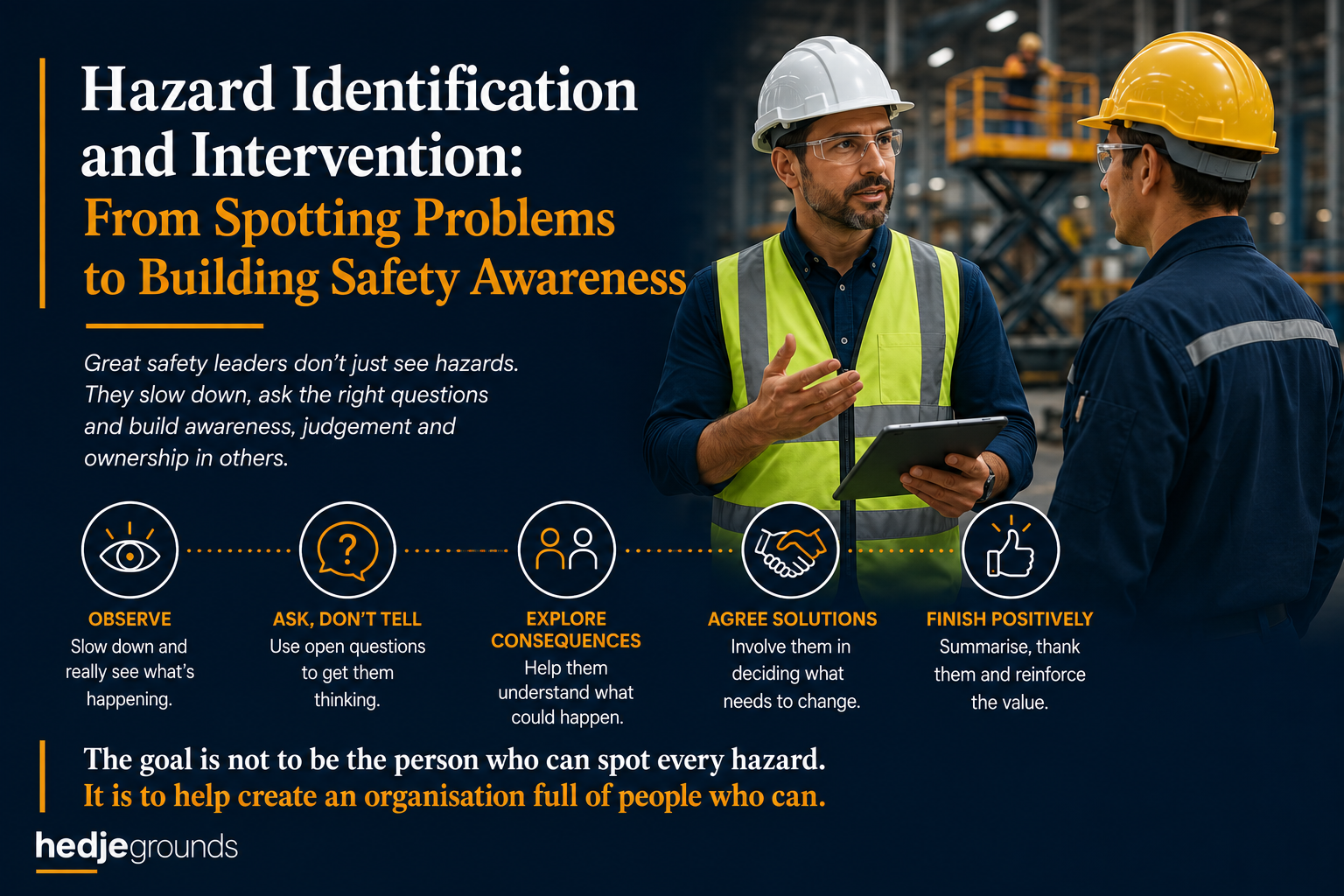
Aug 11, 2026 | By
Effective safety leadership is about more than spotting hazards. By slowing down, asking the right questions and helping people understand consequences and develop their own solutions, leaders can turn everyday safety interventions into opportunities for learning, ownership and stronger safety culture.
Read More