
Jun 05, 2026 | By
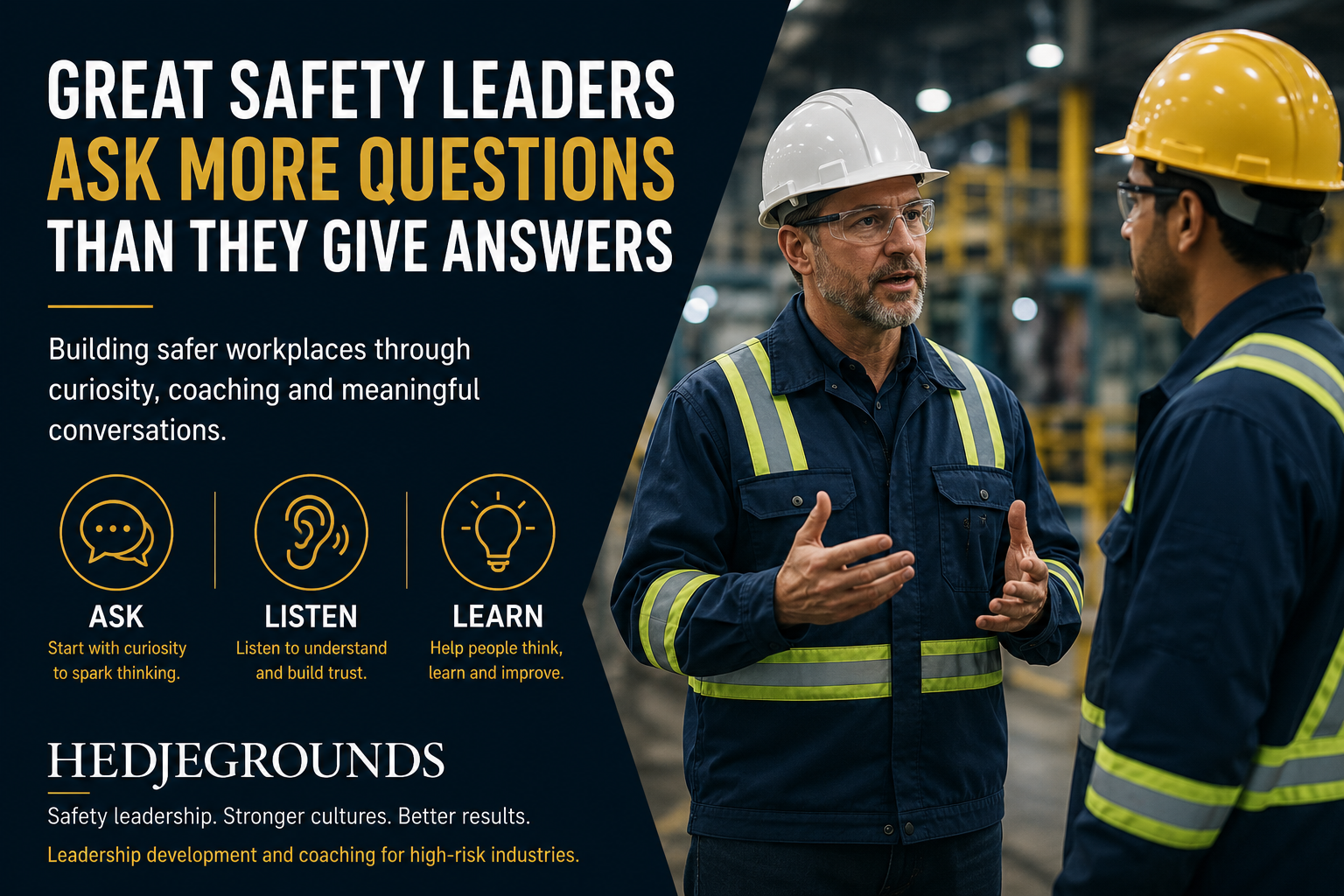
Walk onto almost any industrial site and you will find leaders who care deeply about safety. They have attended the training. They understand the procedures. They know the rules and expectations. Yet despite this, many safety conversations still follow the same familiar pattern.
A leader spots something concerning. The leader tells the worker what is wrong. The worker nods. The leader moves on. The conversation is over.
Or is it?
While this approach may correct the immediate issue, it often misses a much larger opportunity. Because the goal of safety leadership is not simply to achieve compliance in the moment. The goal is to build the workforce’s ability to recognise hazards, assess risks and make safe decisions long after the leader has walked away.
Moving Beyond Telling
Many leaders rise through organisations because they are good problem solvers. When they see an issue, their natural instinct is to fix it. In operational environments, this instinct can be extremely valuable. However, when it comes to influencing behaviour and building safety culture, constantly providing answers can create unintended consequences.
When leaders do all the thinking, workers can become dependent on leadership intervention. When leaders ask thoughtful questions, workers are required to think for themselves.
That thinking process is where learning occurs.
Safety coaching therefore shifts the focus from telling people what to do towards helping them understand why safe choices matter and how to make those choices independently. The approach relies heavily on observation, questioning, listening and intervention.
The Power of Observation
Before a meaningful safety conversation can occur, leaders need to slow down and observe. Too often, leaders arrive at a worksite and immediately jump to conclusions. Effective safety coaches do something different.
They watch.
They look for hazards, controls, exposures and working conditions. They consider the level of risk and think carefully about what they are seeing before engaging the workforce. Observation creates context. Without context, coaching becomes little more than criticism.
Ask, Don’t Tell
Perhaps the most important shift in safety coaching is learning to ask better questions. Simple questions such as:
These questions achieve something that instructions cannot. They encourage reflection, reveal understanding, identify gaps in knowledge and invite workers to participate in the solution rather than simply receiving it. The conversation becomes collaborative rather than transactional.
Listening Is More Difficult Than It Looks
Most leaders believe they are good listeners. Many are surprised to discover how much of their attention is spent preparing their next question or response. Real listening requires curiosity. It requires setting aside assumptions, genuinely trying to understand another person’s perspective and actively avoiding listening traps – including interrupting, changing the subject and focusing on what to say next rather than what is actually being said.
When leaders listen well, workers notice.
And safety conversations become significantly more valuable.
The Qualities of a Great Safety Coach
Technical knowledge matters but the most effective safety coaches possess something more – they are curious, non-judgemental, calm, encouraging and genuinely interested in understanding what is happening in the field. Importantly, they understand that safety coaching is not about catching people out – it is about helping people think.
Safety Culture Changes One Conversation at a Time
Organisations often look for large-scale solutions to improve safety culture such as new systems and procedures and initiatives. These can all be valuable, but culture is ultimately shaped through thousands of daily interactions between leaders and the workforce.
Over time, these small moments accumulate and workers learn whether leaders are there to blame, inspect and enforce, or whether they are there to listen, understand and help. That distinction matters because strong safety cultures are not built through fear of getting something wrong, they are built through a shared commitment to learning, improvement and keeping people safe. And that often starts with a simple question.
Not an instruction.
A question.
By David Turberfield
Sep 14, 2026 | By
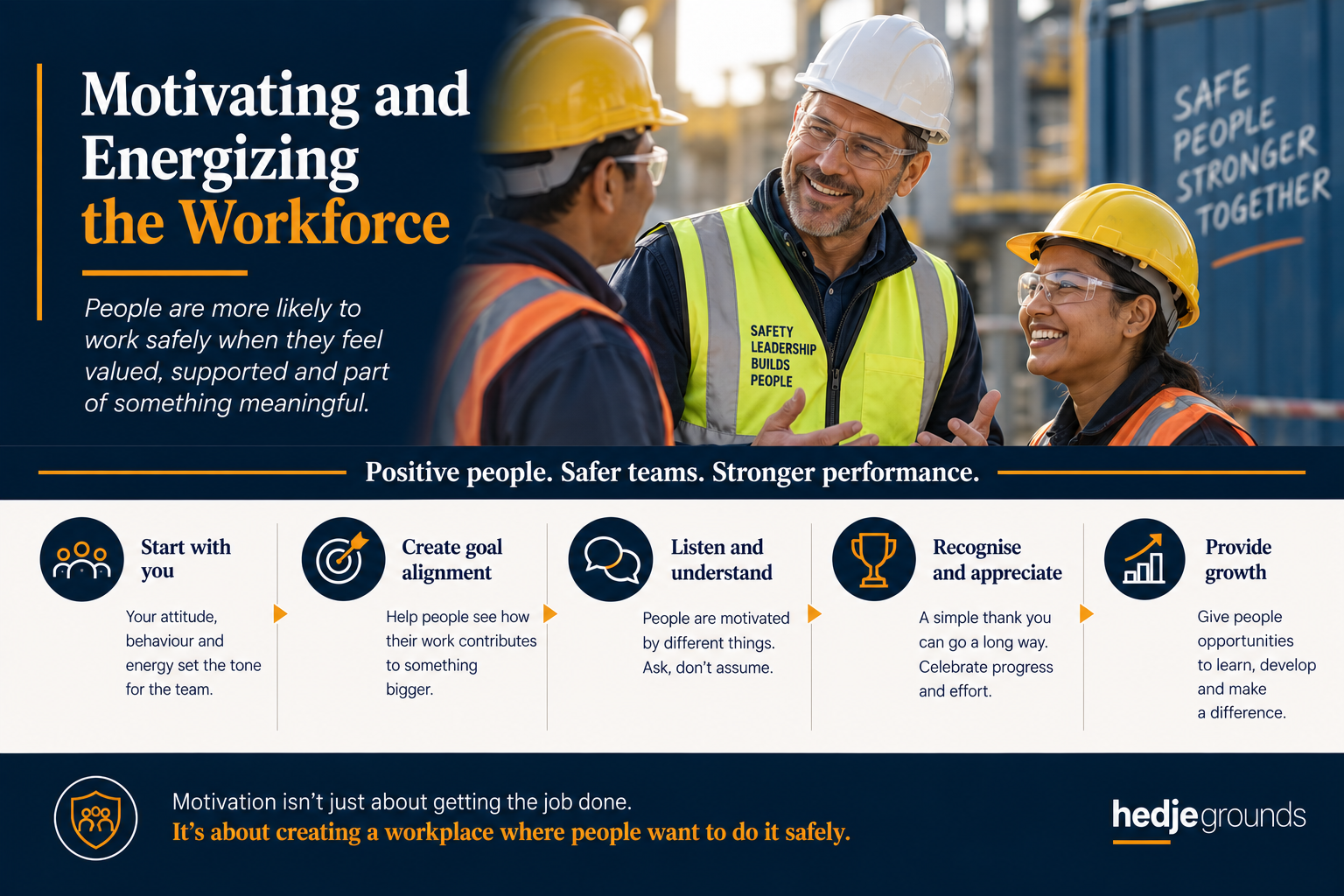
Motivation matters in safety – but leaders cannot simply motivate people on demand. The real opportunity is to create an environment where people feel respected, trusted and willing to contribute, combining motivation with the competence and judgement needed to work safely.
Read More
Aug 27, 2026 | By
A strong safety culture is built when people look out not only for themselves, but for one another. Safety coaching helps turn everyday observations and interventions into opportunities to build awareness, confidence and shared responsibility for safety.
Read More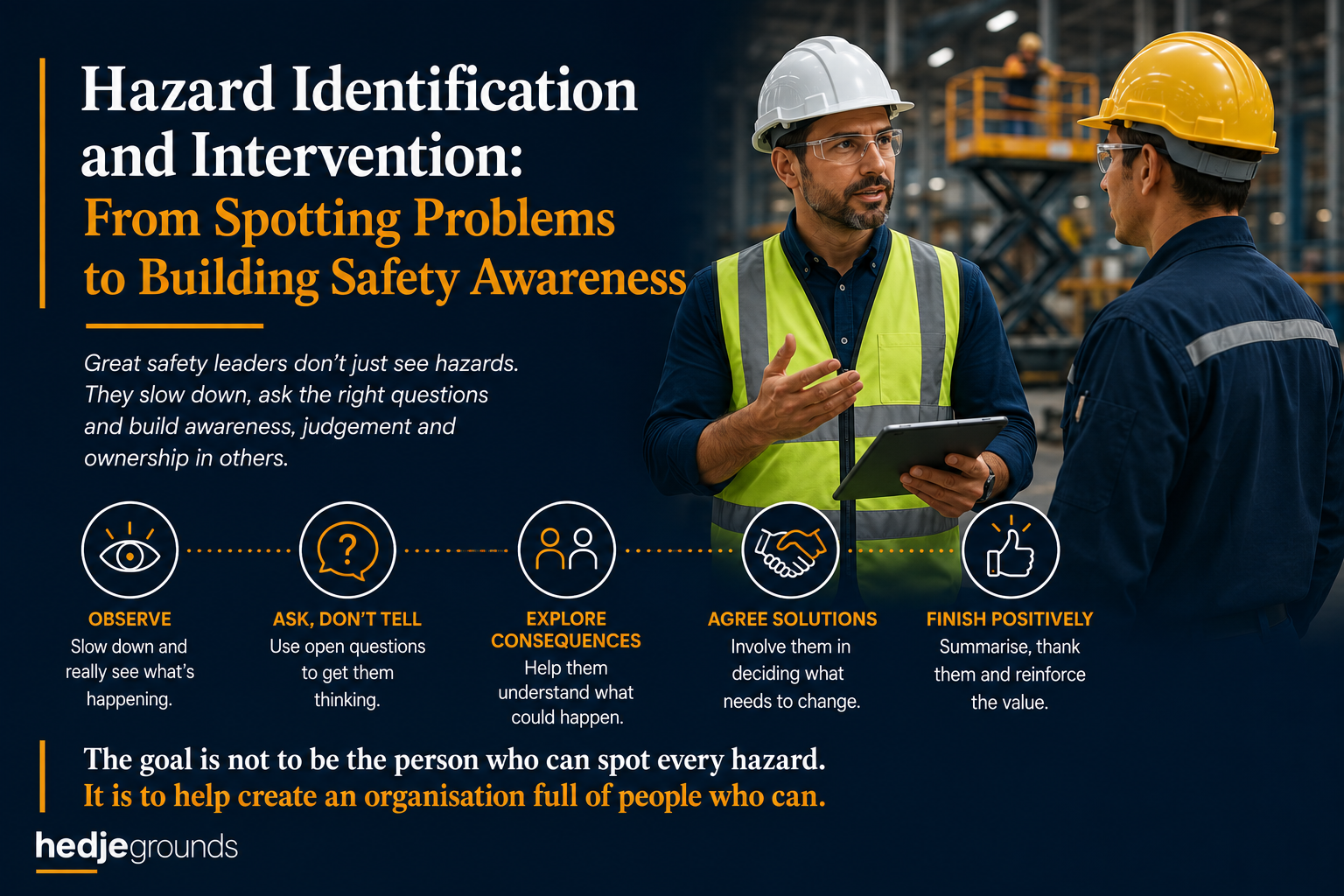
Aug 11, 2026 | By
Effective safety leadership is about more than spotting hazards. By slowing down, asking the right questions and helping people understand consequences and develop their own solutions, leaders can turn everyday safety interventions into opportunities for learning, ownership and stronger safety culture.
Read More