
Jul 05, 2026 | By David Turberfield
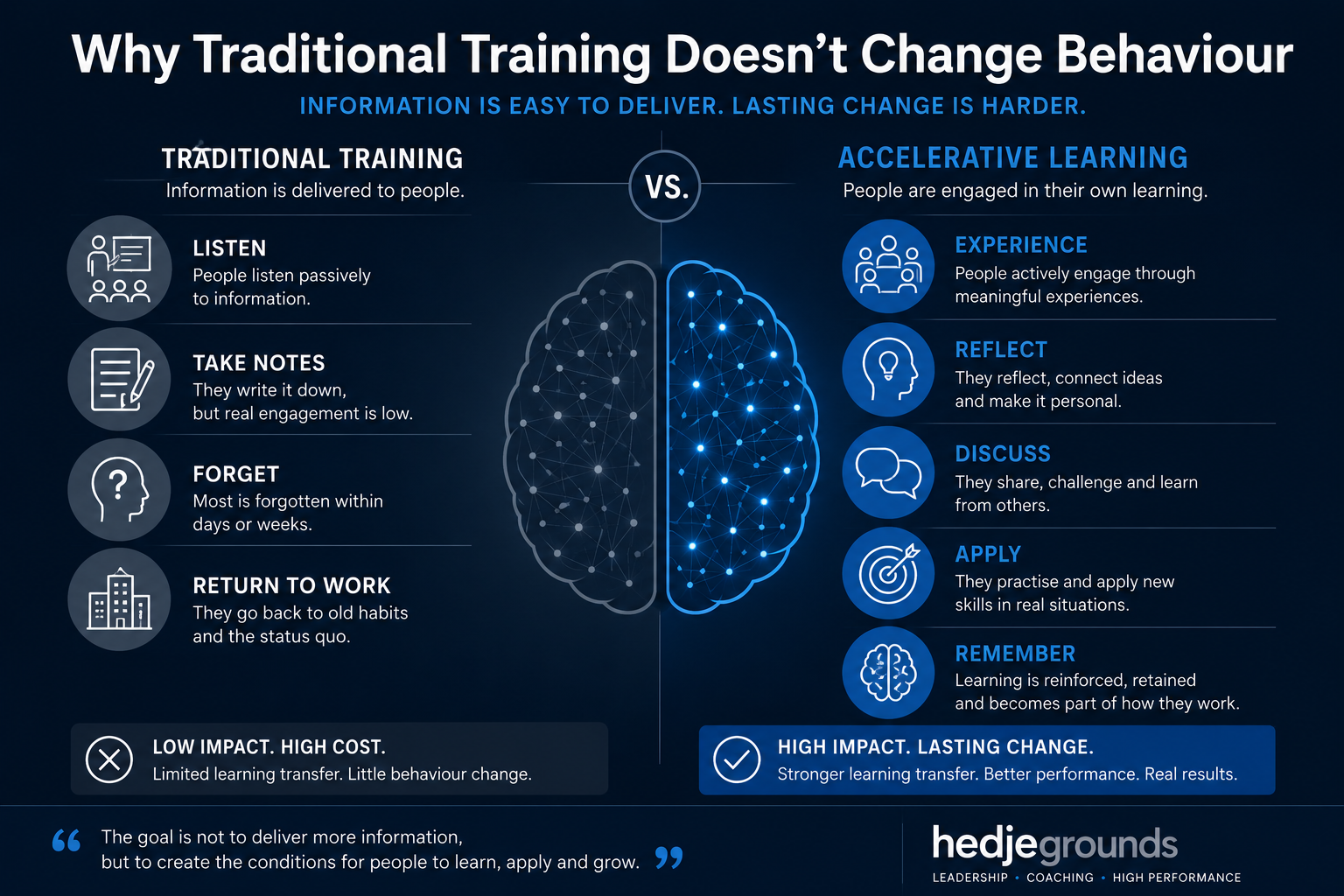
Most organisations invest heavily in developing their people. Leadership programmes, technical training, compliance courses, safety briefings, onboarding, workshops, webinars and e-learning collectively represent one of the largest investments businesses make in their workforce. Yet ask yourself a simple question:
How much of the training you attended six months ago has genuinely changed the way you work today?
For many people, the honest answer is “very little.” The issue isn’t a lack of good intentions. Nor is it a lack of investment. The problem lies in a widespread misunderstanding of what learning actually is. Too often, organisations confuse delivering information with creating learning, and they confuse learning with changing behaviour. They are not the same thing.
As technology makes information instantly accessible, this distinction has become more important than ever. Artificial intelligence can now provide facts in seconds. The real value of learning is no longer simply acquiring knowledge – it’s developing the judgement, confidence, habits and behaviours to apply that knowledge effectively.
That’s where Accelerative Learning offers a fundamentally different approach.
Imagine two organisations.
Both invest £500,000 each year in leadership development.
The first delivers polished presentations, comprehensive manuals and engaging online modules. Participants leave feeling positive, complete the feedback forms and return to work. Three months later, very little has changed.
The second organisation uses the same subject matter but designs every learning experience around participation, reflection, coaching, experimentation and real workplace application. Three months later, managers are conducting better conversations, solving problems differently and demonstrating new leadership behaviours.
The difference wasn’t the content. It was the learning design.
The cost of ineffective training is rarely visible on a balance sheet, but it appears everywhere else:
Organisations often respond by delivering more training, when what they actually need is better learning.
One of the most influential discoveries in educational psychology came from the work of German psychologist Hermann Ebbinghaus, who demonstrated what has become known as the Forgetting Curve. Without reinforcement, people rapidly lose much of what they have learned. We’ve all experienced it.
You attend a two-day course.
By Friday afternoon you’re inspired.
By Monday you’re busy.
By the following Friday you’ve forgotten most of it.
Several weeks later you remember only a handful of ideas.
This isn’t because you’re lazy. It’s because that’s how human memory works. Learning isn’t something that happens when information enters our ears. Learning occurs when the brain actively processes, connects, rehearses and applies new ideas over time. Without that process, information simply fades away.
Most people have endured it. The trainer stands at the front. Slide after slide appears. Participants listen politely. Someone asks whether the slides will be emailed afterwards. Coffee becomes the highlight of the morning. Everyone leaves with a folder full of notes that may never be opened again. It sounds humorous because we’ve all lived through it.
Traditional training often assumes that if information is presented clearly enough, learning will naturally follow. Unfortunately, the human brain doesn’t work that way. Passive listening requires remarkably little mental effort. When learners become passive observers rather than active participants, attention falls, memory declines and engagement disappears.
The irony is that organisations often judge training by how professionally it was delivered rather than by whether it changed behaviour afterwards. The most beautifully designed presentation may be the least memorable part of the programme.
One of the biggest misconceptions in corporate development is the belief that knowledge automatically leads to action.
Consider health.
Most people know they should exercise regularly. Most understand healthy eating. Most recognise the importance of sleep. Yet knowing these things doesn’t necessarily mean we consistently do them. The challenge isn’t knowledge. It’s behaviour.
Leadership development is no different.
Managers rarely struggle because they’ve never heard about delegation, coaching or psychological safety. More often, they struggle because changing deeply established habits requires reflection, practice, feedback and confidence. Real learning changes how people think. Effective learning changes how people behave.
For decades, organisations measured learning by how much information participants could remember. Today that assumption no longer makes sense.
Need the definition of psychological safety?
Ask AI.
Need the latest guidance on ISO standards?
Ask AI.
Need to understand a financial formula?
Ask AI.
Information has become abundant. Judgement remains scarce.
The organisations that will thrive in the future won’t simply employ knowledgeable people. They will develop people who can:
These capabilities cannot be downloaded. They must be developed.
Accelerative Learning starts with a very different assumption. People learn best when they are actively involved in the learning process. Rather than simply listening, participants experience, discuss, experiment, reflect, practise and apply.
Instead of asking,
“How can we present this information?”
Accelerative Learning asks,
“How can we create an experience that changes how people think and behave?”
The trainer becomes less of a lecturer and more of a facilitator. Participants become contributors rather than spectators. Learning becomes something people do, not something that is done to them.
Think back to learning to ride a bicycle. No amount of reading would have taught you balance. You learned through experience.
You fell off.
You adjusted.
You tried again.
Eventually balance became automatic.
Leadership develops in much the same way. Reading about difficult conversations isn’t the same as conducting one. Understanding coaching models isn’t the same as coaching another human being. Knowing how to lead during uncertainty isn’t the same as experiencing uncertainty and reflecting on your decisions afterwards.
Accelerative Learning recognises that meaningful development requires experience alongside knowledge.
One of the most overlooked parts of training is reflection. People often leave workshops with pages of notes but little opportunity to consider:
Without reflection, experiences remain isolated events. With reflection, they become learning. This is why coaching has become such a powerful complement to formal development programmes. Coaching slows people down just enough to convert experience into insight and insight into action.
Imagine attending a single piano lesson and expecting to become a concert pianist. It sounds absurd. Yet organisations sometimes expect leadership behaviours to change after a single workshop.
Skills improve through repetition. Confidence develops through practice. Judgement grows through experience.
Accelerative Learning therefore extends beyond the classroom. It encourages learners to:
Learning becomes an ongoing process rather than a one-off event.
In one leadership programme, rather than spending an hour presenting communication theory, participants are asked to solve a challenging business scenario in small groups.
They receive incomplete information.
They must collaborate under time pressure.
Different personalities emerge.
Conflict appears.
Assumptions are exposed.
Afterwards, the facilitator doesn’t simply explain what happened.
Instead, participants explore their own behaviour.
Why did certain people dominate?
Who wasn’t heard?
What assumptions influenced decisions?
How did pressure affect communication?
The discussion becomes far richer because participants aren’t analysing a case study.
They’re analysing themselves.
Those insights tend to remain long after the slides have been forgotten.
Accelerative Learning isn’t about making training more entertaining. It isn’t about games for the sake of games. Nor is it about replacing expertise with activities. Its purpose is much more ambitious. It is about designing learning experiences that align with how people actually learn. That means creating programmes that stimulate curiosity, encourage participation, promote reflection and provide opportunities to apply new ideas in real situations.
When this happens, something important changes.
Participants stop asking,
“Was the course good?”
Instead they begin asking,
“How can I use this tomorrow?”
That is the point at which learning begins to influence performance.
In today’s world, information has never been easier to access. What organisations increasingly need are people who can interpret information wisely, adapt quickly and continue learning throughout their careers. Training alone cannot achieve that. Learning can.
Accelerative Learning represents a shift from delivering content to developing capability – from teaching people what to think towards helping them discover how to think, reflect and improve. It doesn’t simply help people remember more. It helps them become better leaders, better communicators, better decision-makers and, ultimately, better learners.
For organisations seeking lasting behavioural change rather than temporary enthusiasm, that distinction makes all the difference.
If your organisation wants leadership programmes, safety workshops or development initiatives that produce lasting behavioural change – not simply positive feedback forms – I’d be delighted to discuss how Accelerative Learning can help.
Whether you’re developing senior leaders, building a coaching culture or transforming safety performance, thoughtfully designed learning experiences can unlock capability that traditional training often leaves untouched.
If you’d like to explore how this approach could support your organisation, please get in touch.
By David Turberfield
Sep 14, 2026 | By
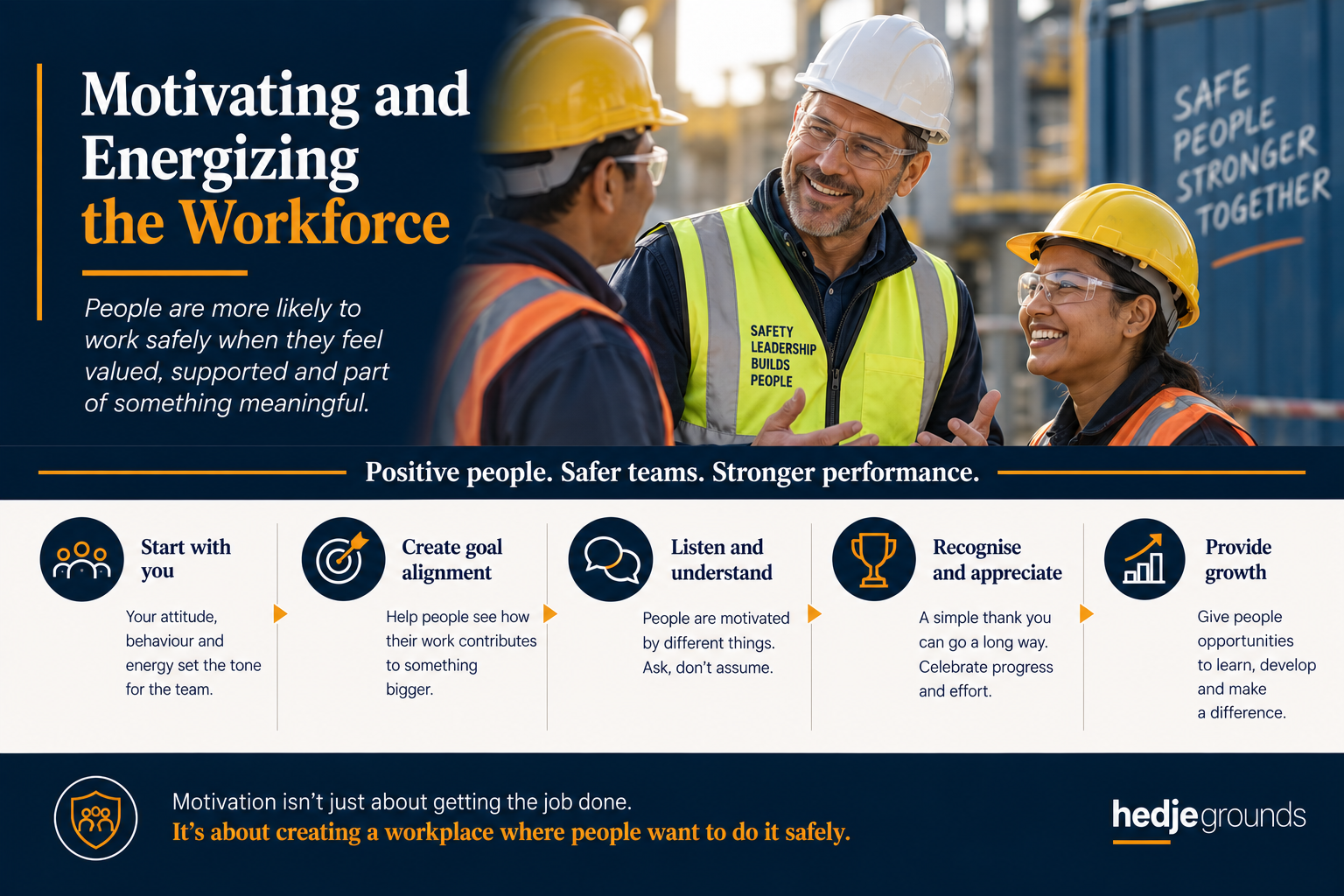
Motivation matters in safety – but leaders cannot simply motivate people on demand. The real opportunity is to create an environment where people feel respected, trusted and willing to contribute, combining motivation with the competence and judgement needed to work safely.
Read More
Aug 27, 2026 | By
A strong safety culture is built when people look out not only for themselves, but for one another. Safety coaching helps turn everyday observations and interventions into opportunities to build awareness, confidence and shared responsibility for safety.
Read More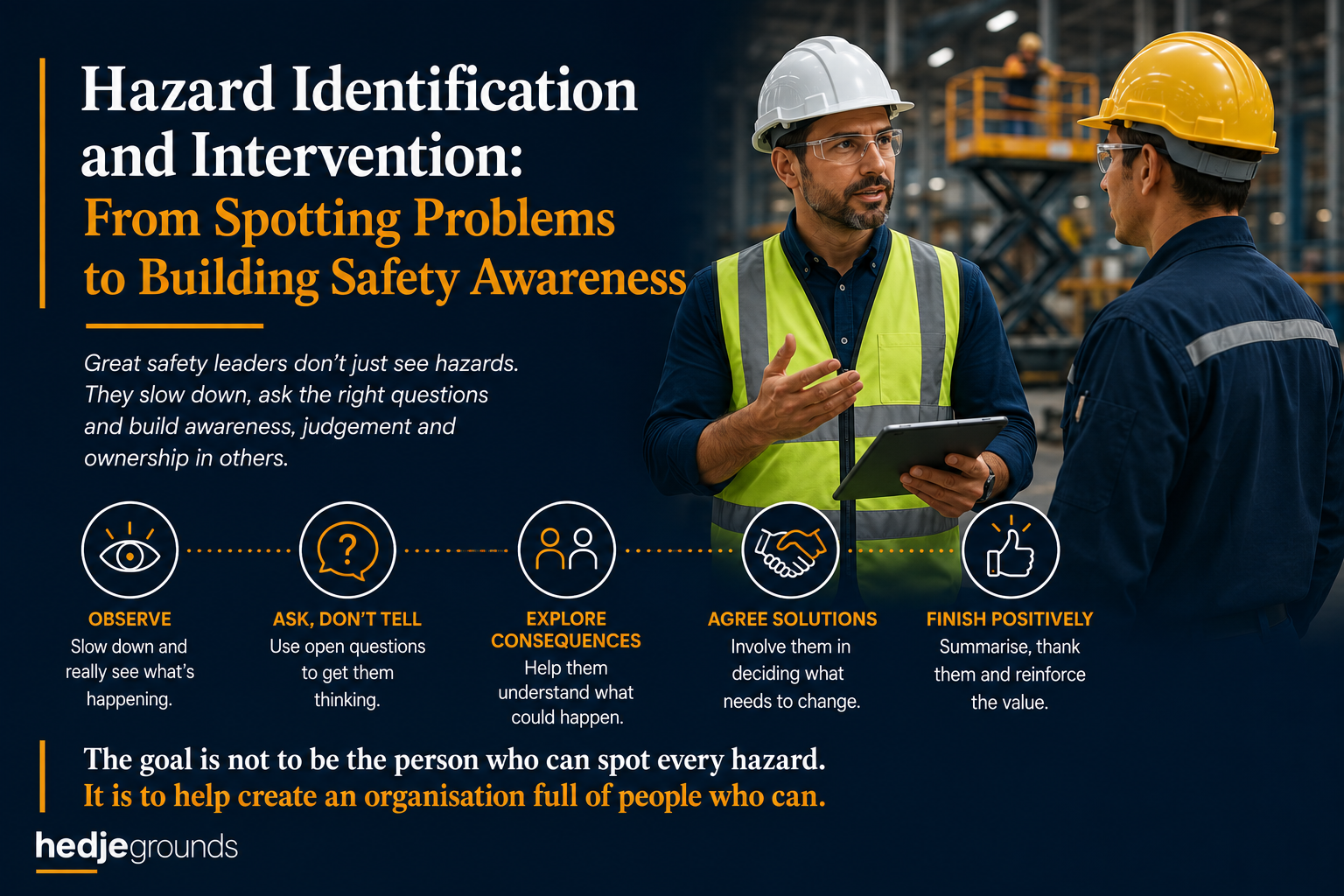
Aug 11, 2026 | By
Effective safety leadership is about more than spotting hazards. By slowing down, asking the right questions and helping people understand consequences and develop their own solutions, leaders can turn everyday safety interventions into opportunities for learning, ownership and stronger safety culture.
Read More