
May 19, 2026 | By
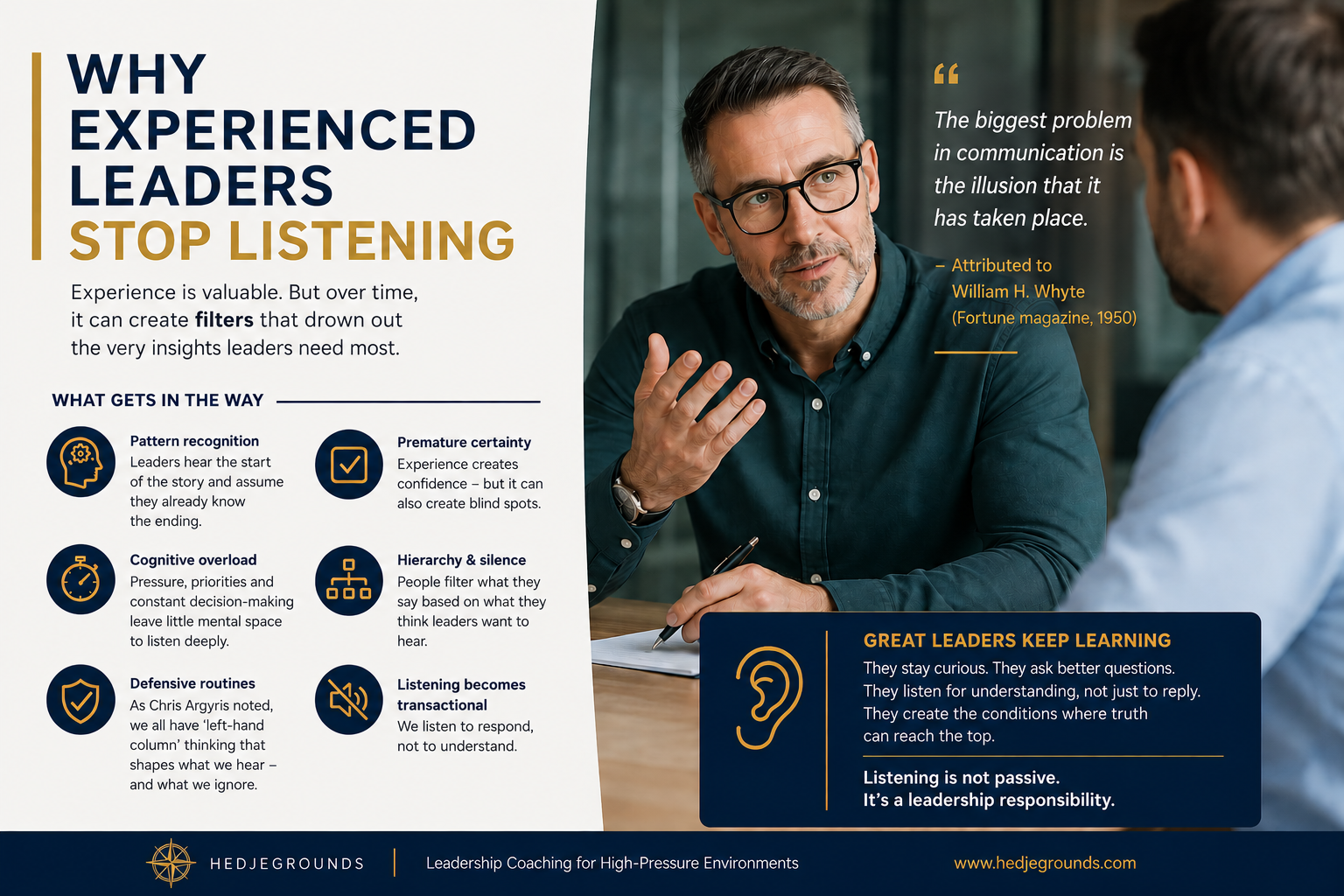
There is an interesting paradox in leadership. The more experienced a leader becomes, the easier it can become for them to stop genuinely listening.
Not because they are arrogant.
Not because they do not care.
And often not because they are consciously dismissive.
In many cases, it happens precisely because they are experienced.
Over time, senior leaders develop pattern recognition. That is one of the reasons they became senior in the first place. They have seen problems before, handled crises before and sat through hundreds, sometimes thousands, of meetings, presentations and operational discussions. Eventually, the brain starts to economise. The leader hears the first 20 seconds of a conversation and unconsciously thinks: “I know where this is going.”
Sometimes they are right, but sometimes they are dangerously wrong.
Experienced leaders often operate under enormous cognitive load – multiple priorities, financial pressure, operational risk, people issues, regulatory demands, endless meetings and constant decision-making. Under these conditions, listening can quietly shift from:
…to:
Psychologist Chris Argyris spent much of his career studying how intelligent and highly capable professionals unconsciously create defensive routines that prevent genuine learning. One of his most useful concepts was the “left-hand column” – the gap between what people say publicly and what they are actually thinking privately. Senior leaders are often surrounded by these hidden conversations. People stop saying what they really think, and leaders themselves can become less open to hearing difficult information than they realise.
Most experienced leaders do not wake up in the morning thinking:
“Today I will ignore my team.”
What usually happens is more subtle. A leader becomes highly solution-focused, overly certain, operationally rushed, or psychologically overloaded.
They interrupt more quickly, finish people’s sentences, explain instead of inquire and move discussions towards closure too early and over time the organisation notices. People begin editing themselves and meetings become more performative and less honest.
Amy Edmondson’s work on psychological safety demonstrated that teams learn and perform better when people feel safe to speak openly, raise concerns and admit uncertainty. Importantly, psychological safety is not about being “nice”; it’s about creating conditions where reality can still reach leadership before problems become incidents. In operational and safety-critical environments, this matters enormously.
One of the greatest risks for experienced leaders is not a lack of knowledge, but premature certainty. Experience creates mental shortcuts, which most of the time are incredibly valuable as they allow fast decisions and operational efficiency, but they can also create blind spots.
The leader believes they already understand the situation, know the cause and the solution and already know what the workforce will say. This is particularly dangerous during organisational change, safety incidents, cultural drift, operational pressure, or periods of rapid growth – the moments when old assumptions often stop being reliable.
Poor listening is often imagined as:
In reality, poor listening in senior leadership is usually more sophisticated than that. The leader may appear highly engaged and may ask questions continuously, but internally they are preparing their response, defending a position, solving too quickly, or steering the conversation toward an already-formed conclusion.
True listening requires something more difficult:
That becomes harder as expertise grows.
In many organisations, hierarchy quietly distorts information. Frontline teams quickly learn what leadership wants to hear, what creates friction, and what feels unsafe to raise. Research into organisational silence has shown that silence is often not an individual issue but a systemic organisational behaviour. The more senior the leader becomes, the more filtered their information can become.
Ironically, the people with the greatest authority can sometimes become the least exposed to operational reality. This is one reason visible field leadership matters so much. Not leadership by presentation deck but leadership by direct observation, direct conversation and genuine curiosity.
The strongest senior leaders I have worked with over the years tend to share one characteristic – they remain teachable. They continue asking questions long after they could have started relying purely on authority or expertise, and they resist the temptation to become “the person with the answers”. Instead, they stay interested in:
This requires humility – not performative humility but real humility. The kind that accepts, “I may not fully understand what is happening here yet.”
Good listening is not a soft skill. In high-pressure operational environments, it is a risk-management capability which influences:
The challenge for experienced leaders is preventing experience from hardening into certainty because the moment leaders stop genuinely listening is often the moment organisations begin quietly losing access to reality.
Written by David Turberfield
Sep 14, 2026 | By
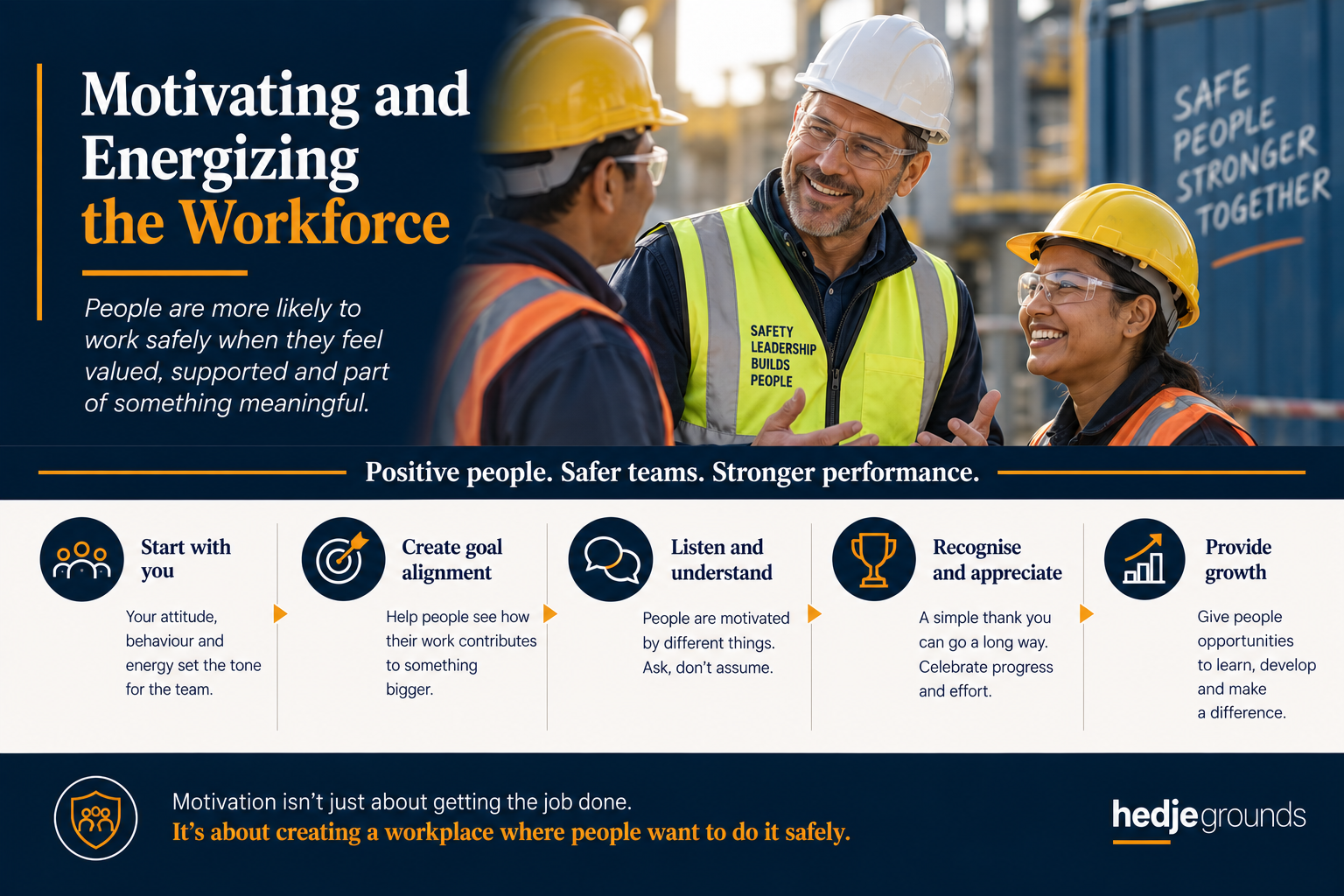
Motivation matters in safety – but leaders cannot simply motivate people on demand. The real opportunity is to create an environment where people feel respected, trusted and willing to contribute, combining motivation with the competence and judgement needed to work safely.
Read More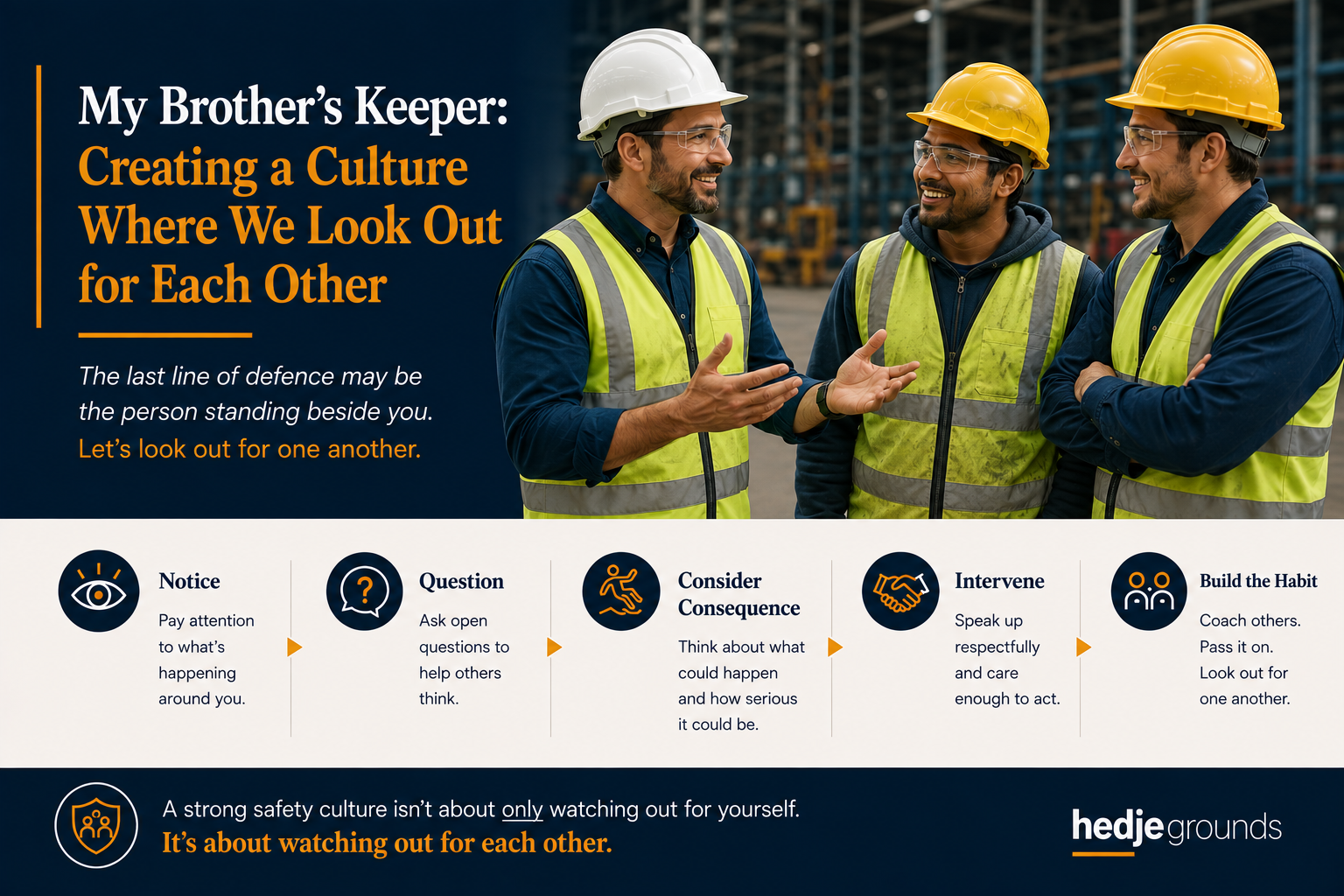
Aug 27, 2026 | By
A strong safety culture is built when people look out not only for themselves, but for one another. Safety coaching helps turn everyday observations and interventions into opportunities to build awareness, confidence and shared responsibility for safety.
Read More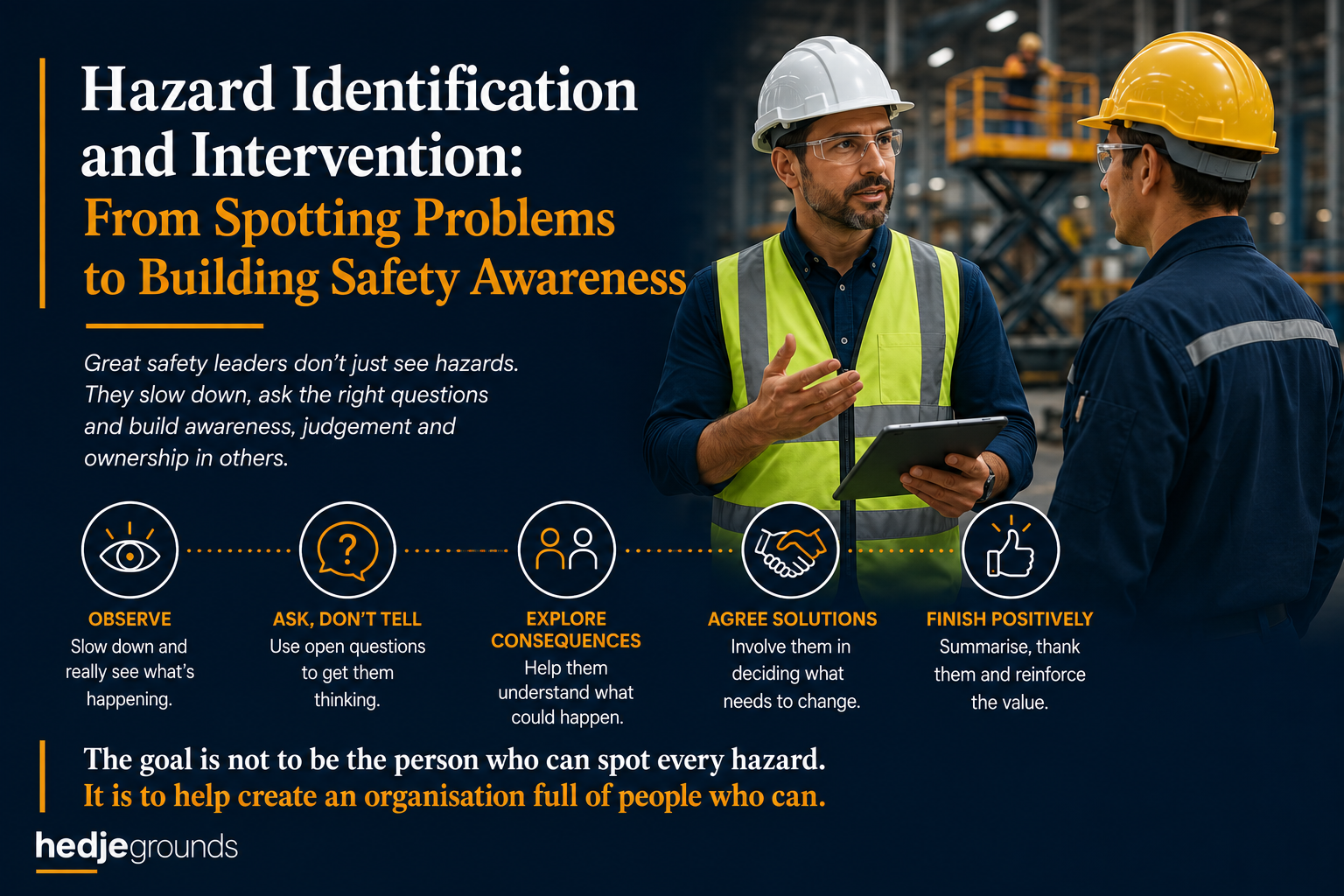
Aug 11, 2026 | By
Effective safety leadership is about more than spotting hazards. By slowing down, asking the right questions and helping people understand consequences and develop their own solutions, leaders can turn everyday safety interventions into opportunities for learning, ownership and stronger safety culture.
Read More