
Jun 24, 2026 | By
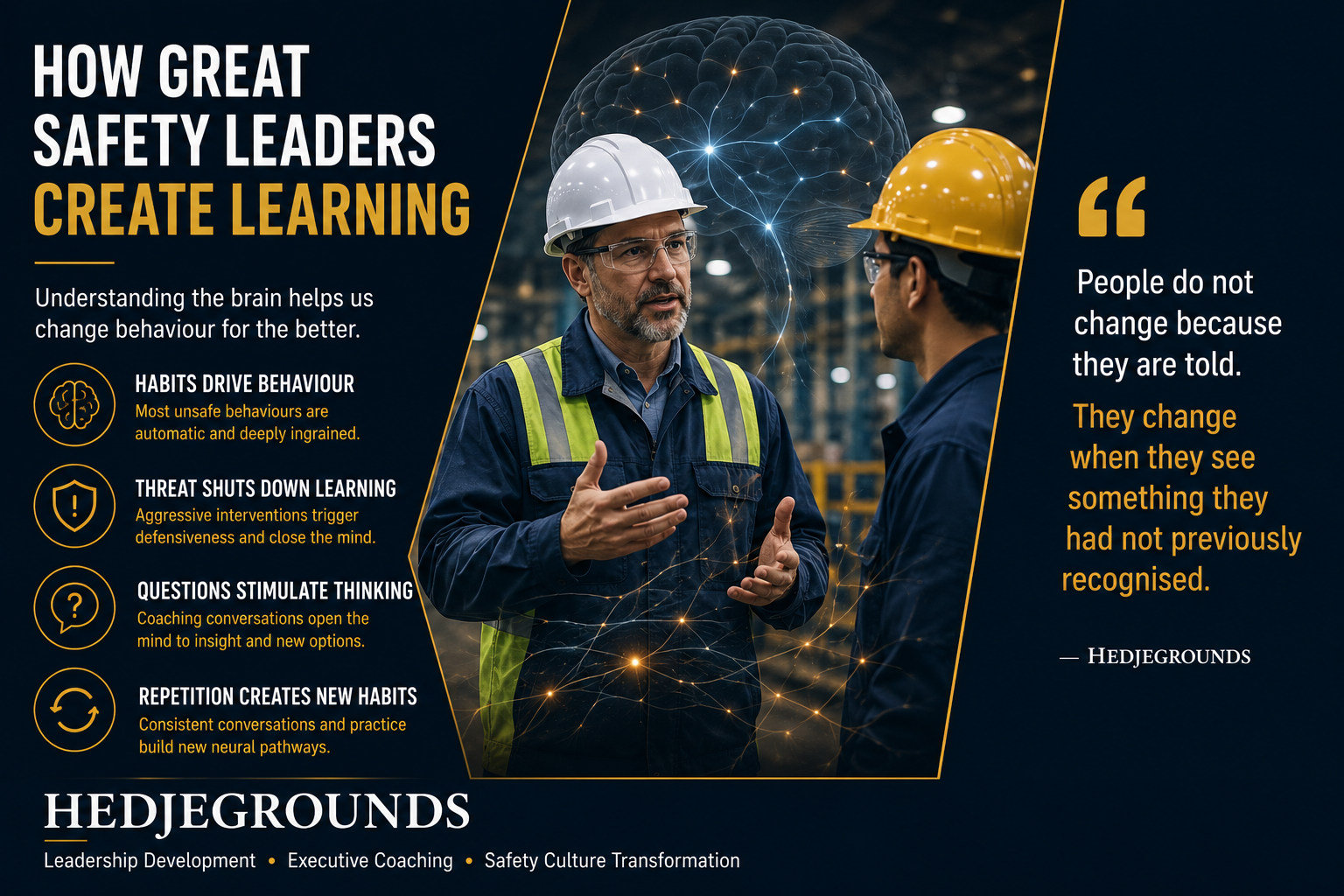
Most organisations invest significant time and effort in safety communication. They develop procedures, conduct toolbox talks, issue reminders, investigate incidents and reinforce expectations. Yet despite these efforts, unsafe behaviours often persist. People continue to take shortcuts, revert to old habits and make decisions that expose themselves and others to unnecessary risk.
The question is why.
The answer may have less to do with safety knowledge and more to do with how the human brain actually works.
Safety Is Not Just a Technical Problem
Many safety interventions are built on a simple assumption: if people understand the risks, they will make better choices. Unfortunately, human behaviour is rarely that straightforward.
Modern neuroscience suggests that our behaviour is influenced by different parts of the brain, each serving a different purpose. While the science is more nuanced than early models suggested, the distinction remains useful for understanding safety behaviour.
One part of the brain helps us think, analyse, learn and solve problems. Another stores habits, emotional responses and learned patterns. A more primitive part is concerned primarily with survival and reacts automatically when it perceives a threat.
Understanding which part of the brain we are engaging can help explain why some safety conversations lead to learning while others create resistance.
The Power of Habit
Most unsafe behaviours are not acts of deliberate recklessness. More often they are habits. People have performed a task the same way hundreds of times. They have never experienced an incident. Their peers do it the same way. The behaviour feels normal, efficient and familiar. Over time, these routines become deeply embedded.
This helps explain why simply telling someone to “follow the procedure” often has little impact. The existing habit is already established. The individual is not making a conscious decision each time. They are operating on autopilot.
Anyone who has tried to change a long-established personal habit understands how difficult this can be. Safety behaviours are no different.
Why Aggressive Interventions Often Backfire
When leaders observe unsafe behaviour, the natural temptation is to intervene forcefully. The intention is usually positive. The leader wants to prevent harm. However, when the conversation becomes confrontational, something interesting happens. The individual often becomes defensive.
Instead of reflecting, they justify. Instead of learning, they explain. Instead of becoming curious, they focus on protecting themselves. In psychological terms, the brain shifts into a threat response.
People become less open to new information and more focused on self-preservation. Learning shuts down. Trust erodes. The likelihood of future reporting and open communication decreases.
This is one reason why blame cultures frequently struggle to improve safety performance. Fear may produce short-term compliance, but it rarely produces long-term learning.
Coaching Creates the Conditions for Learning
The most effective safety leaders understand that sustainable behaviour change requires more than correction. It requires reflection.
Rather than immediately telling people what they did wrong, they ask questions:
– What was happening here?
– What were you seeing at the time?
– What risks concern you most?
– What alternatives might have been available?
Open questions encourage people to think rather than defend. They create space for insight. The goal is not to win an argument but to help the individual see something they had not previously recognised.
When people arrive at their own conclusions, they are far more likely to change their behaviour than when those conclusions are imposed upon them. This is one of the fundamental principles of coaching and one of the reasons coaching has become increasingly important in modern safety leadership.
Repetition Creates New Habits
One conversation rarely changes behaviour. Real change occurs through repetition. Each quality safety conversation reinforces awareness. Each coaching interaction strengthens understanding. Each successful application of a new behaviour helps create new patterns.
Over time, what initially felt unfamiliar becomes natural. The new behaviour becomes the habit. This is why effective safety culture transformation is not achieved through a single campaign, workshop or initiative. It is achieved through thousands of small interactions between leaders and workers over an extended period. Culture changes when conversations change.
The Leadership Challenge
Many organisations still rely heavily on rules, procedures and enforcement. These remain important but if we want people to consistently make safe decisions in dynamic and uncertain environments, we need more than compliance. We need leaders who can influence how people think, who create psychological safety, who listen before they speak. Leaders who use questions to stimulate learning rather than trigger defensiveness.
The future of safety leadership is not simply about controlling behaviour. It is about understanding how behaviour is formed in the first place. Because when leaders understand how people learn, they become far more effective at helping people work safely.
By David Turberfield
Sep 14, 2026 | By
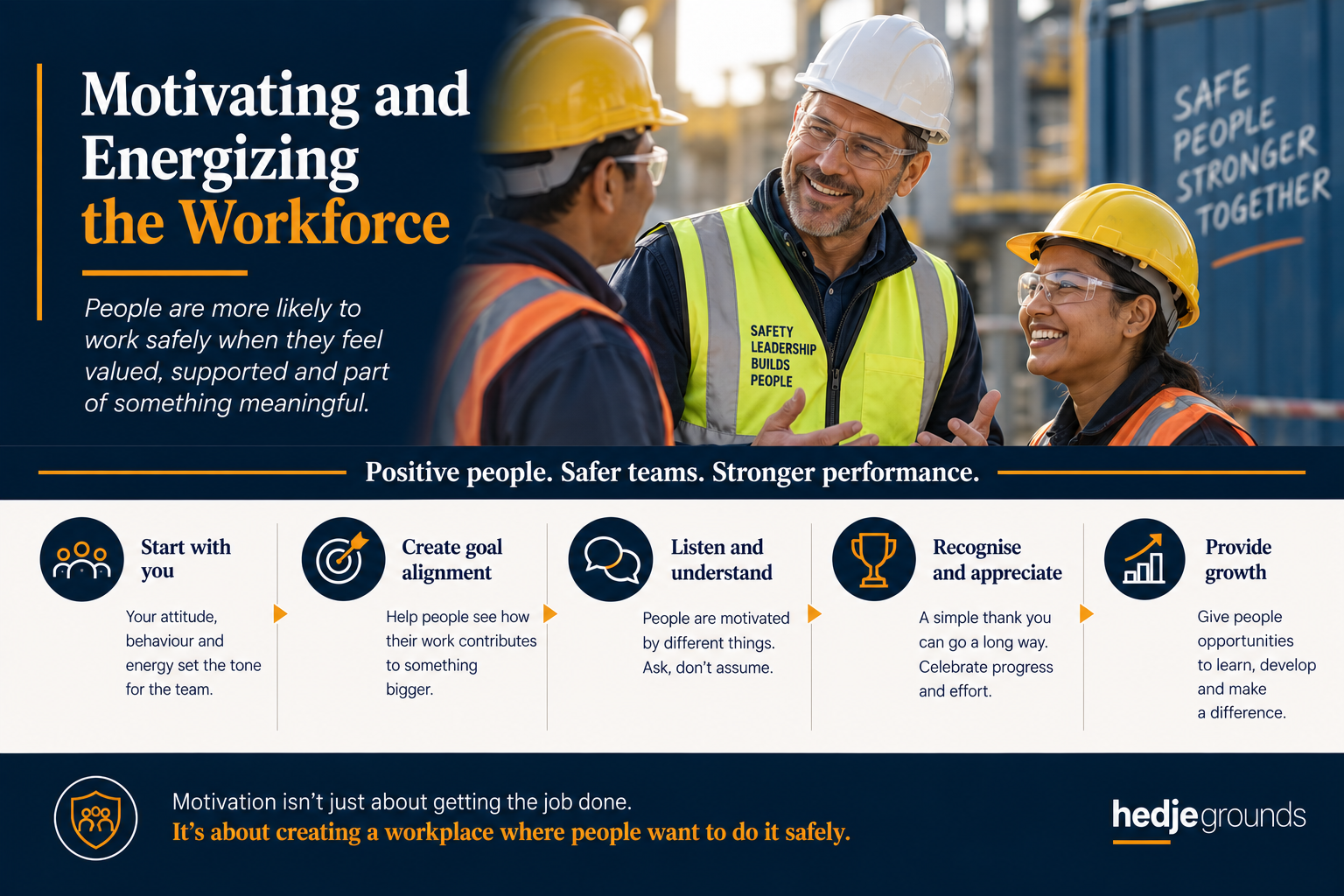
Motivation matters in safety – but leaders cannot simply motivate people on demand. The real opportunity is to create an environment where people feel respected, trusted and willing to contribute, combining motivation with the competence and judgement needed to work safely.
Read More
Aug 27, 2026 | By
A strong safety culture is built when people look out not only for themselves, but for one another. Safety coaching helps turn everyday observations and interventions into opportunities to build awareness, confidence and shared responsibility for safety.
Read More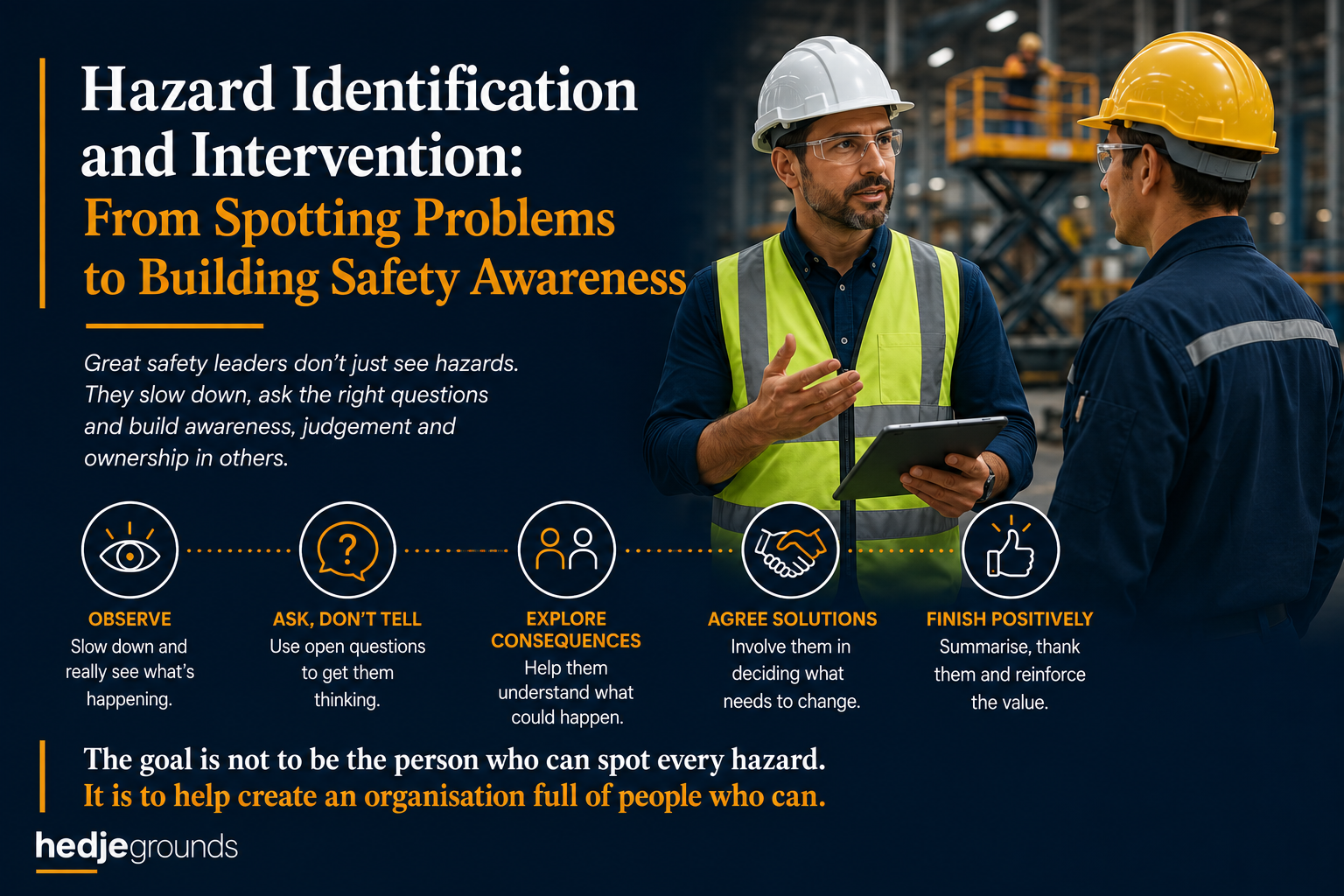
Aug 11, 2026 | By
Effective safety leadership is about more than spotting hazards. By slowing down, asking the right questions and helping people understand consequences and develop their own solutions, leaders can turn everyday safety interventions into opportunities for learning, ownership and stronger safety culture.
Read More