
Jun 29, 2026 | By

Most organisations invest heavily in safety systems. They develop procedures, conduct training, issue safety alerts and investigate incidents in the hope that people will make safer decisions.
Yet anyone who has worked across multiple sites knows that something else is happening.
The same individual can move from one workplace to another and, within a matter of weeks, begin behaving completely differently. A conscientious worker can quickly adopt unsafe shortcuts. Equally, someone arriving from a poor safety environment can become an excellent role model in a strong safety culture.
If the procedures are largely the same, what changes?
The answer is culture.
People Learn Safety From People
Human beings are social creatures. Long before we learn through formal instruction, we learn through observation. We watch those around us, imitate behaviours that appear successful and gradually adopt the unwritten rules of the groups we belong to.
Safety is no different.
New employees rarely learn how work is really done from the procedure manual. They learn by watching experienced operators, supervisors and colleagues. They quickly identify what behaviours are rewarded, what shortcuts are tolerated and what “normal” looks like.
In many respects, safety behaviour is contagious. Good habits spread. Unfortunately, bad habits spread just as easily. This is why changing procedures alone rarely changes behaviour. Unless the social norms change, people naturally drift towards the behaviours that are accepted by those around them.
Small Changes Can Reach a Tipping Point
One of the most encouraging aspects of organisational behaviour is that culture does not require everyone to change simultaneously. Research into organisational networks suggests that relatively small groups of influential people often shape the behaviour of much larger populations. Malcolm Gladwell popularised this idea as The Tipping Point – the moment when small changes begin to spread rapidly through a community.
Every organisation has its experts, connectors and respected opinion leaders. These individuals may or may not hold senior positions, but people watch them closely. When these individuals consistently demonstrate excellent safety leadership, ask better questions, challenge unsafe behaviours and openly discuss risk, others begin to follow. Culture starts to move.
The objective is not to convince everyone individually. It is to create enough positive influence that safe behaviour becomes the accepted norm.
Environment Sends Powerful Signals
People do not simply respond to policies; they respond to the environment around them.
Walk onto a site where housekeeping is poor, damaged barriers remain unrepaired and safety equipment is neglected, and people quickly draw conclusions about what is truly important.
Conversely, environments that are clean, organised and professionally maintained communicate a different message. Expectations become visible long before anyone speaks.
The Broken Windows Theory, while originally developed in a different context, illustrates an important principle for safety leaders: visible signs of neglect often encourage further neglect, while visible standards reinforce positive behaviour.
Culture is shaped by what people see every day.
Organisational Structure Matters
Traditional organisations often rely on information flowing up and instructions flowing down.
The further senior leaders sit from the operational front line, the greater the risk that important information becomes filtered, delayed or diluted. Decisions are made using second-hand information, while workers can begin to feel disconnected from leadership.
Modern high-performing organisations increasingly recognise that communication needs to flow in every direction.
General Stanley McChrystal’s concept of Team of Teams demonstrated how stronger horizontal communication, shared understanding and trust can dramatically improve organisational performance in complex environments.
The same principle applies to safety.
The organisations that learn fastest are rarely those with the most procedures. They are those where people speak openly, share concerns early and learn continuously across teams.
Coaching Changes How Culture Spreads
This is where safety coaching becomes such a powerful leadership tool. Traditional supervision often focuses on giving instructions, checking compliance and correcting mistakes. Coaching takes a different approach.
Leaders ask questions. They listen carefully. They seek to understand how work is actually being carried out rather than how they assume it is being done. These conversations strengthen relationships, improve trust and encourage people to speak openly about risks before incidents occur.
Over time, coaching creates something far more valuable than compliance. It creates connection and connection is how positive behaviours spread throughout an organisation.
Final Thoughts
Every organisation has a safety culture. The only question is whether that culture is spreading the behaviours you want.
People are constantly observing one another. They notice what leaders pay attention to, what experienced workers tolerate and what behaviours are rewarded. Procedures remain essential, but procedures alone rarely change culture.
Culture changes when leaders create environments where safe behaviours are visible, conversations are open and positive examples become contagious.
Because in the end, people don’t simply follow rules.
They follow people.
By David Turberfield
Sep 14, 2026 | By
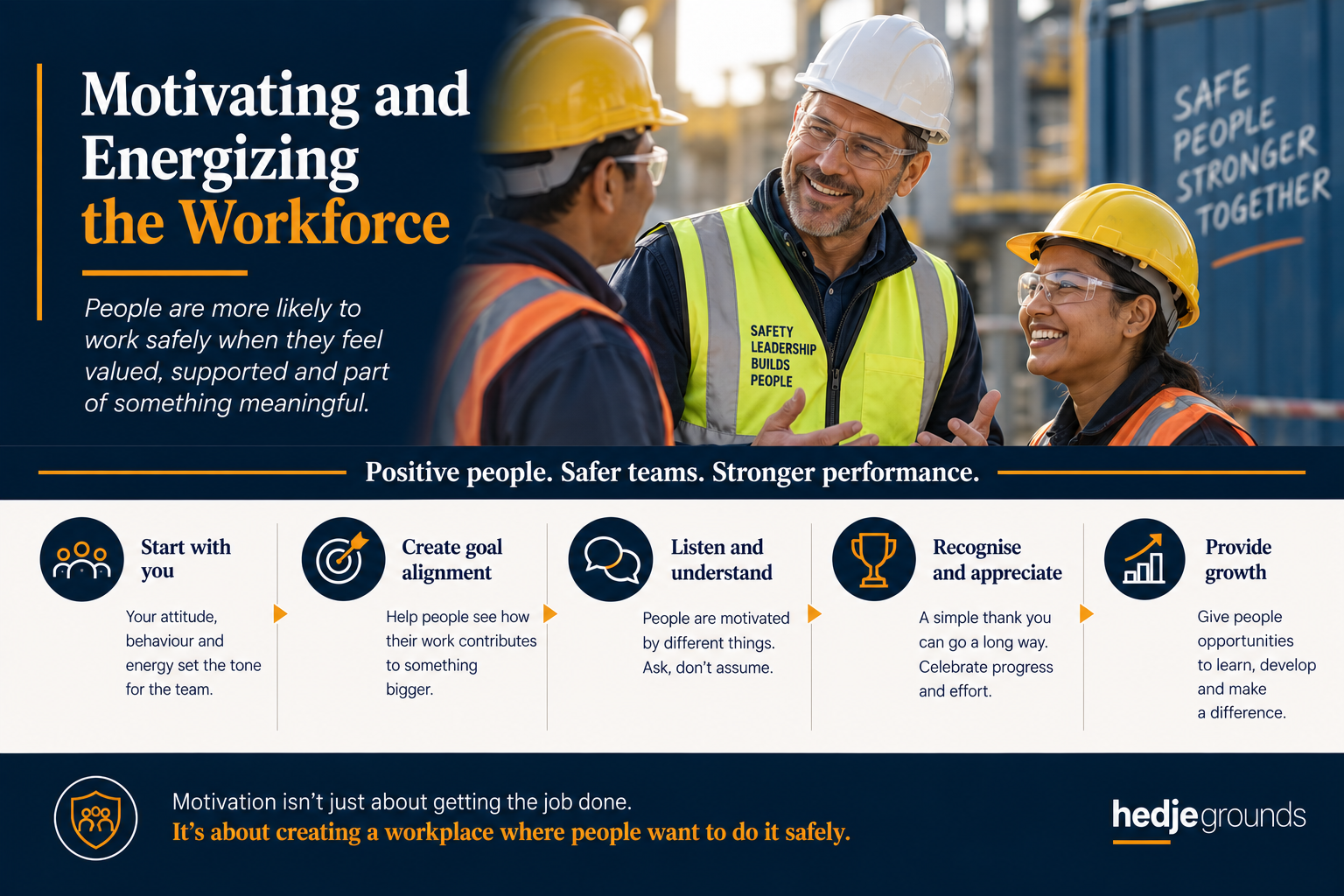
Motivation matters in safety – but leaders cannot simply motivate people on demand. The real opportunity is to create an environment where people feel respected, trusted and willing to contribute, combining motivation with the competence and judgement needed to work safely.
Read More
Aug 27, 2026 | By
A strong safety culture is built when people look out not only for themselves, but for one another. Safety coaching helps turn everyday observations and interventions into opportunities to build awareness, confidence and shared responsibility for safety.
Read More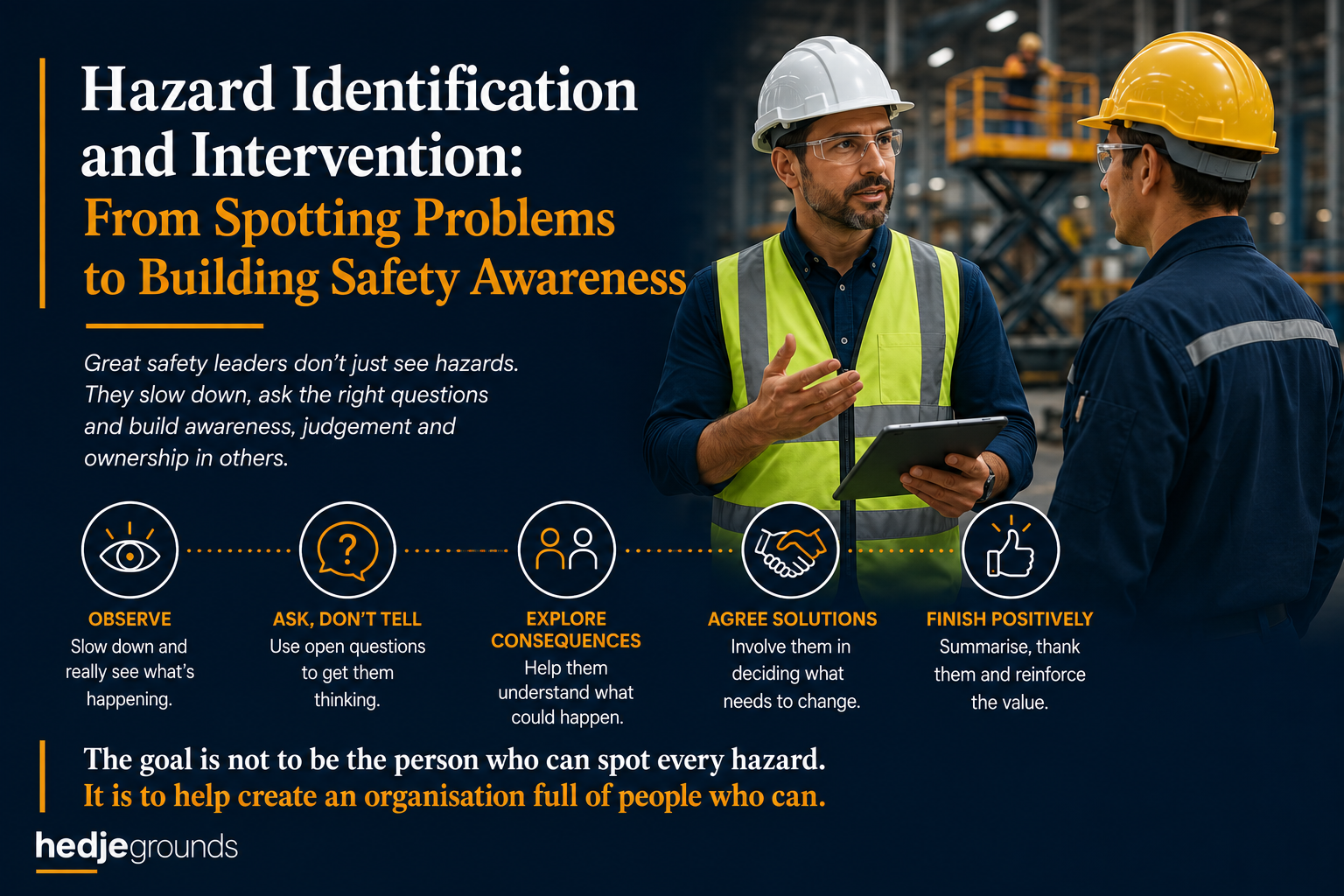
Aug 11, 2026 | By
Effective safety leadership is about more than spotting hazards. By slowing down, asking the right questions and helping people understand consequences and develop their own solutions, leaders can turn everyday safety interventions into opportunities for learning, ownership and stronger safety culture.
Read More